


































































The Presidency has delivered a fierce rebuttal to former President Olusegun Obasanjo’s suggestion that Nigeria should seek international intervention to resolve its worsening insecurity, describing the call to subcontract internal security to foreign governments as “capitulation” and “ignoble.”
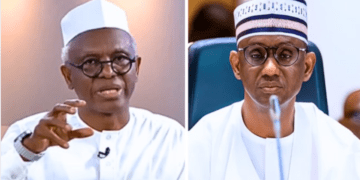
The strong response, delivered by Sunday Dare, Special Adviser to the President on Media and Communication, followed Obasanjo’s remarks in Jos, where he argued that Nigerians have the right to seek help from the international community if the government fails in its constitutional duty to protect them.
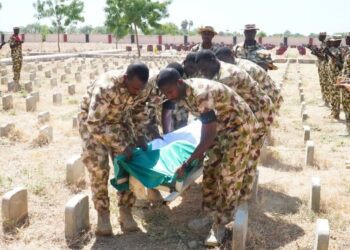
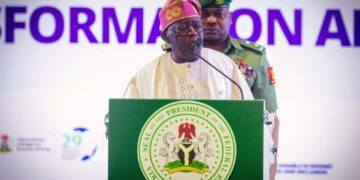
In a statement released on Sunday, the Presidency defended President Bola Tinubu’s multi-layered strategy against terrorism, insisting that current efforts are already yielding results and that the administration is confronting “real terrorists” across the nation.
Dare directly challenged the former President’s statesmanship, stating: “The suggestion that Nigeria should effectively subcontract its internal security to foreign governments is not statesmanship; it is capitulation.”
The Special Adviser accused Obasanjo and other critics of “selective amnesia,” pointing out that the ideological foundations and early organizational cells of extremist groups like Boko Haram began and grew under the previous administration’s watch. . He argued that those now offering lectures ignored the threats when they first sprouted.
The core of the dispute centers on the concept of sovereignty versus the protection of citizens. Obasanjo argued that the scale and persistence of violence demonstrate that Nigeria’s security system is no longer capable of confronting current threats, justifying international military intervention. He also demanded the government stop negotiating with terrorists.
The Presidency maintains that ceding control to foreign powers is an affront to sovereignty and a psychological victory for terrorists. They insist President Tinubu is confronting a complex, multi-layered threat, including ISIS and Al-Qaeda-linked Sahel franchises, local bandits, and cross-border cells, through a whole-of-government approach encompassing kinetic operations, intelligence-led action, and non-kinetic interventions.
The Presidency cautioned that when former leaders publicly disparage the nation’s capacity, they effectively “hand psychological victories to the very terrorists” murdering and kidnapping citizens.
The Presidency’s defense hinges on the powerful, emotive concept of sovereignty, a principle sacrosanct in global affairs, particularly in Africa where the history of foreign intervention is complex and often viewed with suspicion.
However, TheLink News notes that national sovereignty is inherently tied to the state’s capacity to deliver its primary duty: security. When large swathes of territory become ungoverned spaces controlled by non-state actors, the practical definition of sovereignty is severely weakened, regardless of diplomatic rhetoric.
While the notion of a foreign security takeover is extreme, Obasanjo’s suggestion acts as a powerful moral charge: it forces the administration to prove its capacity now or face the inevitable erosion of its domestic and international credibility. The government must quickly demonstrate that its “strategies are yielding results” by securing the release of the kidnapped victims and dismantling the financial networks of terror, a promise recently made by a presidential aide. Failing to translate rhetoric into decisive action will only strengthen the argument that the state is failing its core mission.