




































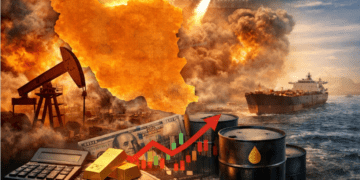
































Global oil benchmarks surged by over 1.7% today, Tuesday, 13 January 2026, as the threat of a massive supply disruption in Iran overshadowed the prospect of new Venezuelan crude hitting the market.
In a session defined by “geopolitical jitters,” Brent Crude jumped to a two-month high of $64.93 per barrel, while the US benchmark, West Texas Intermediate (WTI), finally breached the psychological $60 barrier to settle at $60.52. For Nigeria, this price hike presents a “double-edged sword” of increased export revenue versus the rising cost of imported refined petroleum.
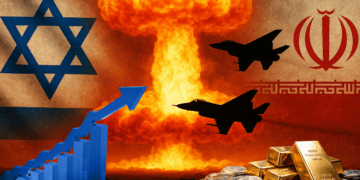
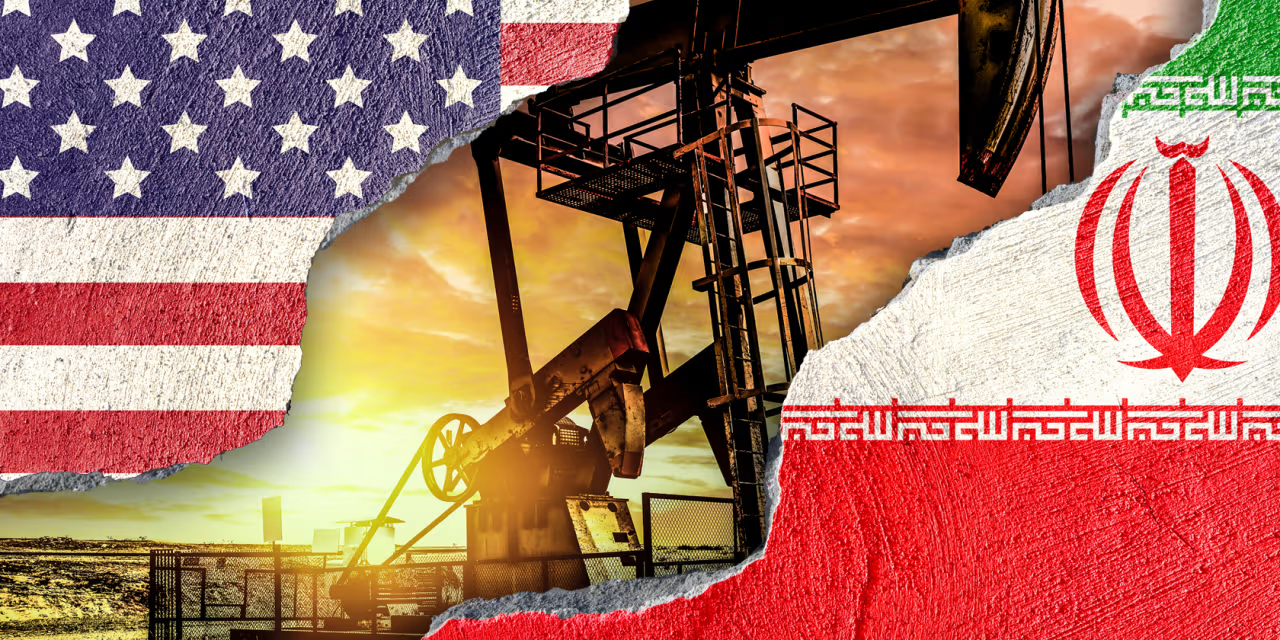
The rally was ignited by a rapid escalation in the Iranian crisis, which has now entered its third week of nationwide anti-government protests.
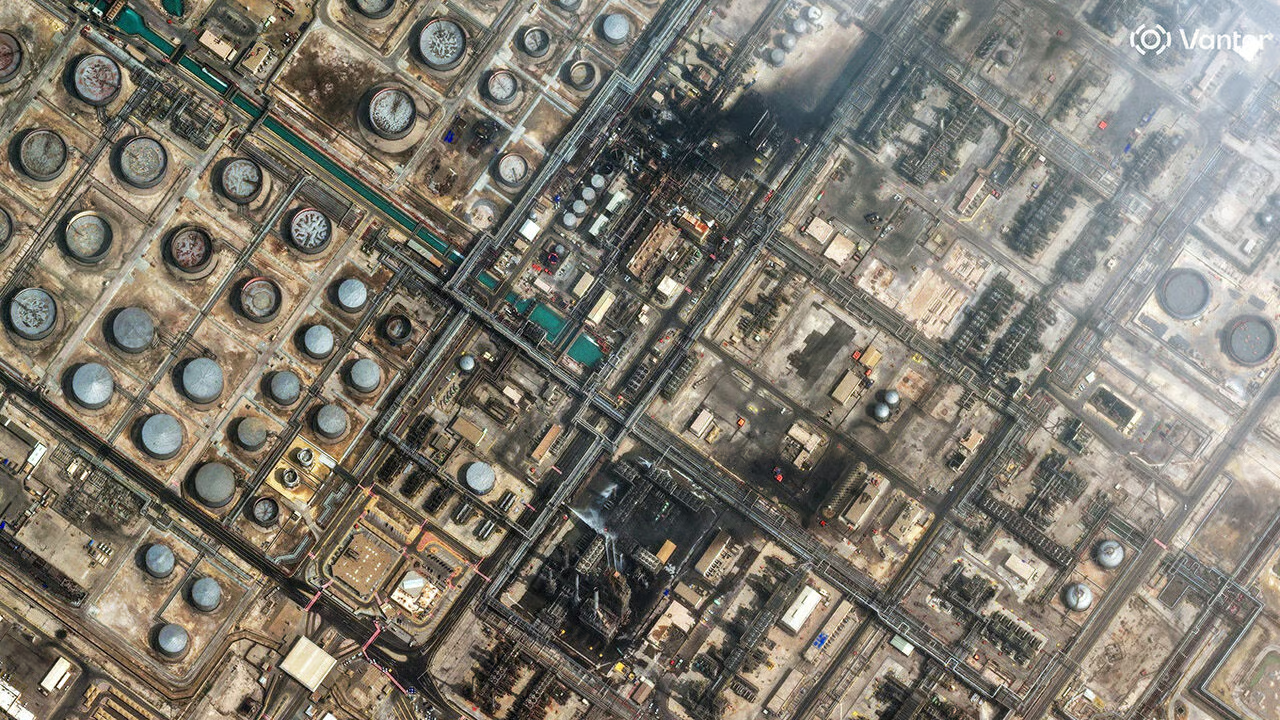
Reports of strikes among Iranian oil workers have raised the specter of a total shutdown of the country’s 3.3 million barrels per day (bpd) production.
Market uncertainty reached fever pitch after President Trump announced via social media a “firm and final” 25% tariff on any country, including China, that continues to do business with the Iranian regime.
Adding fuel to the fire, the Wall Street Journal reported that the White House is being briefed on military options, including “targeted strikes” on Iranian command structures, should the crackdown on protesters continue.
| Benchmark | Current Price | Daily Change | Weekly Trend |
| Brent Crude | $64.93 | +1.7% | Up about 5.5% |
| WTI Crude | $60.52 | +1.7% | Up about 6.0% |
| Natural Gas | $3.38 | -1.0% | Supply Surplus |
While a $65 Brent price is significantly higher than the $54 federal budget benchmark for 2026, the gains are tempered by domestic economic realities:
The Central Bank of Nigeria (CBN) is watching the rally closely. While higher oil prices boost FX reserves, the global “flight to safety” often strengthens the dollar, putting further pressure on the Naira, which currently trades near ₦1,710/$ in the parallel market.
With the landing cost of petrol tied to international crude prices, there is growing concern in Abuja that the “market-reflective” pricing of PMS (Premium Motor Spirit) could see pump prices rise above ₦1,350 per litre across Lagos and Abuja.
Nigeria’s hope for price stability now rests on the “Trump-Maduro” transition. If the US successfully brings 50 million barrels of Venezuelan crude to the Gulf Coast refiners this month, it could act as a “fire extinguisher” for the current price surge.
“The market has added a $3–4 ‘fear premium’ per barrel today. Traders are no longer just watching the protests; they are watching the Strait of Hormuz. If that chokepoint closes, $65 will look cheap very quickly.” – Dr. Amara Okeke, Energy Economist, Lagos.
All eyes are now on the White House, where President Trump is expected to meet senior advisors later today to finalize the US response to Iran. Simultaneously, the OPEC+ monitoring committee is reportedly considering a “virtual emergency huddle” to assess if the Iran situation warrants a reversal of their current production pause.