



































































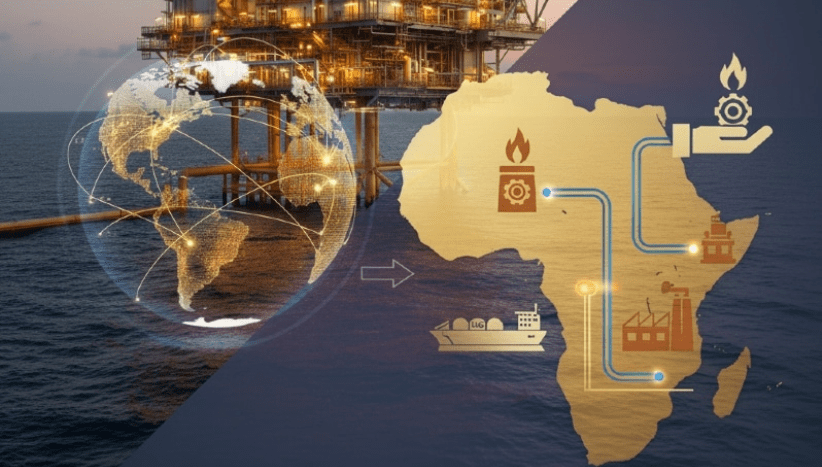
Global oil majors are aggressively snapping up offshore exploration blocks across West and Southern Africa, betting that the region’s geology could deliver discoveries on the scale of Brazil’s deepwater boom, as companies race to restock reserves amid stronger-than-expected long-term demand for fossil fuels.
Companies such as Chevron and TotalEnergies are leading the charge, alongside peers including Shell, which recently returned to offshore Angola after a 20-year absence. The renewed interest reflects a strategic shift as growth in US shale production plateaus, forcing majors to look elsewhere for large, conventional oil and gas opportunities.
“The majors are clearly in something of an acreage reload,” said David Thomson, Vice President for Sub-Saharan Upstream at Welligence Energy Analytics. “They have been able to secure large acreage positions at a time when other mature basins are offering fewer growth options.”
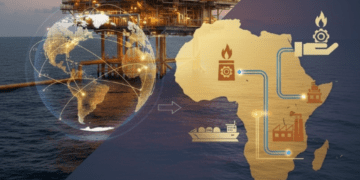
West Africa’s appeal lies in a combination of proven geology, underexplored deepwater basins, and regulatory reforms aimed at attracting foreign investment. Countries such as Nigeria, Angola, Namibia, and Senegal have adjusted fiscal terms and licensing frameworks to remain competitive in a tightening global exploration race.
The scale of recent discoveries underlines why the region is drawing comparisons with Brazil. Since 2020, around 11% of all global oil and gas discoveries, about 8.7 billion barrels of oil equivalent (boe), have been made along the West African margin, according to Justin Cochrane, African upstream regional research director at S&P Global Commodity Insights.
Of that total, roughly 14% of global liquids discoveries, or 5.6 billion barrels, were found in the region, the vast majority crude oil rather than gas.
“These are material volumes by any standard,” Cochrane said. “They reinforce West Africa’s position as one of the most prospective exploration regions globally.”
Among international oil companies, France’s TotalEnergies has been the most active. In September, the company finalized new production-sharing contracts in Nigeria, Congo Brazzaville, and Liberia, expanding its footprint across both established and frontier basins.
Chevron has also increased its exposure, while other majors are closely monitoring developments in Namibia’s Orange Basin, where recent discoveries by independents have raised expectations of a major new petroleum province.
Shell’s return to Angola, once one of Africa’s top oil producers, signals renewed confidence in deepwater projects that can deliver large, long-life barrels capable of justifying investment even under tighter energy transition pressures.
The scramble for acreage reflects a broader reassessment of the global energy outlook. Oil companies now expect fossil fuel demand to remain higher for longer than anticipated just a few years ago, driven by population growth, energy security concerns, and slower-than-expected adoption of alternatives in some regions.
That outlook has sharpened the urgency to replenish reserves depleted by years of underinvestment following the 2014 oil price crash and the COVID-19 pandemic.
Despite the optimism, operating in West and Southern Africa still carries risks, including political uncertainty, regulatory shifts, security challenges, and infrastructure constraints. Governments are also under pressure to balance investment incentives with demands for greater local benefits and environmental safeguards.
Still, industry executives argue that the potential rewards outweigh the risks.
“With US shale maturing, the majors need new growth engines,” Thomson said. “West and Southern Africa are back at the centre of that conversation.”
As competition intensifies and exploration budgets rise, the coming years will determine whether Africa can truly deliver the “next Brazil”, or whether the promise of its offshore basins remains only partially fulfilled.