

































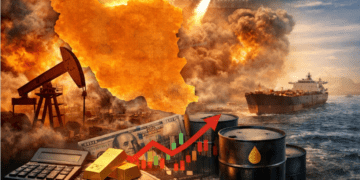

































The ongoing conflict involving Iran and its regional adversaries is beginning to ripple across Africa, raising concerns among economists and policymakers that disruptions to critical global shipping routes could trigger higher food prices, fuel costs and fresh economic pressures across the continent.
Experts warn that African economies, many already grappling with inflation, debt burdens and fragile infrastructure, are particularly exposed to supply chain shocks caused by disruptions in the Strait of Hormuz, one of the world’s most strategic maritime corridors.
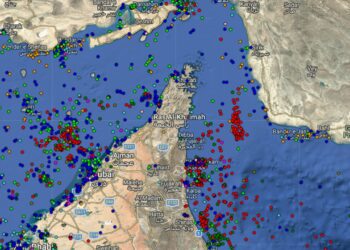
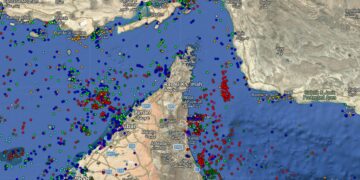
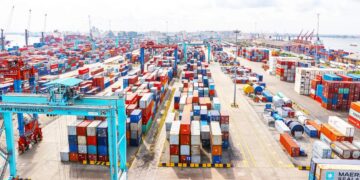
The narrow waterway, located between Iran and Oman, handles a large share of global shipments of oil, gas and fertilizer. Since the escalation of tensions in the Middle East, shipping through the route has become increasingly uncertain, with insurance costs rising and cargo movement slowing.
According to the United Nations Conference on Trade and Development (UNCTAD), about one-third of global seaborne fertilizer trade passes through the Strait of Hormuz, making the corridor vital to global agriculture.
Many African countries rely heavily on fertilizer imports shipped from the Gulf region, where large quantities are produced due to abundant natural gas resources used in the manufacture of nitrogen-based fertilizers such as urea.
UNCTAD data show that 54 percent of fertilizer imports to Sudan arrive through the route, while Somalia depends on it for about 30 percent of supply and Kenya for about 26 percent.
The disruption has already pushed fertilizer prices upward globally, raising concerns about food production costs across the continent.
“African economies are highly vulnerable during global shocks because of their reliance on external markets and limited fiscal buffers,” UNCTAD noted in its recent analysis.
Higher fertilizer prices could significantly affect African agriculture, where many farmers already struggle with rising input costs and climate-related challenges.
If the trend continues, analysts say it may translate into higher food prices and deepen the cost-of-living crisis across many African nations where households spend a large portion of their income on food.
Jervin Naidoo, a political analyst at Oxford Economics Africa, said the continent is especially exposed to global shocks.
“Any disruptions, any shocks really affect all of us,” Naidoo said, noting that African economies tend to experience stronger ripple effects from external crises.
Beyond fertilizer supply, rising global oil prices are also expected to affect African economies, many of which depend heavily on imported fuel.
According to XN Iraki, a professor of business and economics at the University of Nairobi, higher oil prices will be felt “acutely” across the continent.
He said the impact could be severe because a large portion of Africans work in the informal sector, where income levels are often unstable.
“When fuel prices rise, transport and food costs increase almost immediately, which directly affects the daily survival of millions of people,” Iraki explained.
Several African governments have begun taking precautionary steps to cushion their economies against potential supply shocks.
In Kenya, Energy Minister Opiyo Wandayi said the government had secured petroleum imports scheduled to last until the end of April.
“We will continue taking necessary actions to ensure there is uninterrupted supply,” Wandayi said.
In Tanzania, President Samia Suluhu Hassan has directed authorities to strengthen the country’s strategic fuel reserves.
Similarly, Ethiopia has introduced a special fuel subsidy aimed at protecting consumers from surging energy prices, while Zambia has warned fuel retailers against hoarding supplies.
However, analysts caution that such measures may only offer short-term relief if the conflict continues to disrupt global trade flows.
While many African countries could suffer economic strain, some oil-exporting nations may experience a temporary boost in revenue if global prices remain elevated.
Producers such as Nigeria, Algeria, and Angola could see increased demand for their crude exports as global markets look for alternative supply sources.
Still, economists say such gains may be uneven and may not offset broader economic pressures such as inflation and currency volatility.
The disruption is also affecting African exports to the Middle East, a key market for agricultural goods.
Last week, Mutahi Kagwe, agriculture minister of Kenya, said the conflict had disrupted shipments of tea, meat and other food products destined for Middle Eastern markets.
The current situation echoes the economic shock experienced in 2022, when the Russian invasion of Ukraine disrupted global food and energy supply chains.
With uncertainty surrounding the duration of the Middle East conflict, economists warn that Africa may once again find itself bearing the brunt of global geopolitical tensions far beyond its borders.