













































































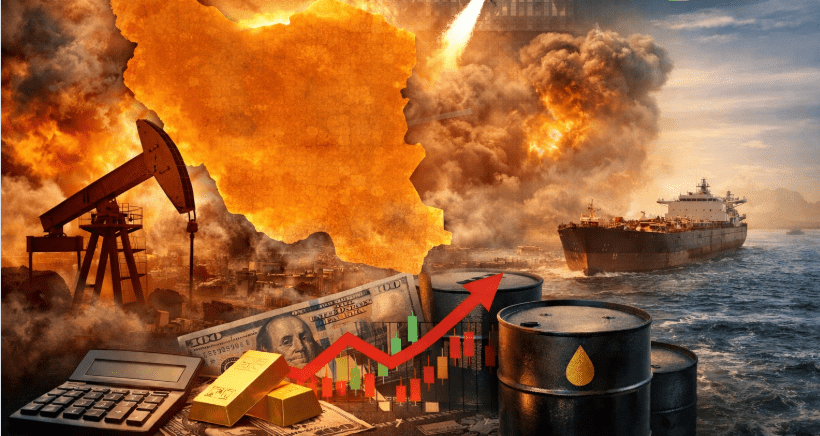
Global financial markets turned cautious on Wednesday as rising oil prices and concerns over the widening conflict involving Iran, the United States and Israel unsettled investors, sending Wall Street stocks lower while U.S. Treasury yields climbed.
Major U.S. equity indexes retreated during trading as investors assessed the economic implications of escalating tensions in the Middle East alongside fresh inflation data that reinforced expectations of a cautious monetary policy path.
The benchmark S&P 500 slipped during the session, while the tech-heavy Nasdaq Composite also moved lower as traders trimmed risk exposure. The Dow Jones Industrial Average declined modestly amid broad-based selling across sectors sensitive to geopolitical uncertainty.
Meanwhile, yields on the benchmark U.S. 10-Year Treasury Note rose as investors digested February inflation figures showing consumer prices climbing in line with expectations. Rising yields typically reflect expectations that interest rates may remain elevated for longer.
Despite the stock market weakness, the U.S. Dollar held firm against major global currencies, buoyed by its traditional status as a safe-haven asset during periods of geopolitical stress.
Energy markets remained at the centre of investor concern as crude prices continued to climb amid fears that the ongoing conflict could disrupt global energy supplies.
The surge in prices for Brent Crude and West Texas Intermediate came as markets monitored the potential impact of the widening conflict on shipping routes, oil infrastructure and regional production.
The Middle East accounts for a significant portion of the world’s oil exports, and analysts warn that any sustained disruption could trigger broader economic consequences, including higher inflation and slower global growth.
Traders have become increasingly sensitive to developments in the region following U.S. and Israeli military strikes on Iranian targets and Tehran’s retaliatory actions, which have already disrupted air travel and heightened security risks across the region.
Data released Wednesday showed U.S. inflation rising modestly in February, reinforcing expectations that the Federal Reserve may maintain its cautious approach to interest rate cuts.
While the figures were largely in line with forecasts, they highlighted persistent price pressures in areas such as housing and services, complicating the central bank’s efforts to steer inflation toward its long-term target.
Investors have been closely watching inflation trends to gauge when the Fed might begin easing monetary policy after an extended period of aggressive rate hikes aimed at curbing price increases.
Market strategists say the escalating conflict in the Middle East has become an increasingly significant factor for global investors, introducing fresh uncertainty into an already fragile economic outlook.
Higher oil prices, disrupted trade routes and the possibility of a broader regional confrontation could weigh on economic activity worldwide if the crisis drags on.
“The market is trying to price two major risks at once, persistent inflation and geopolitical escalation,” one analyst said. “Either one alone would be manageable, but together they create a much more volatile environment.”
For now, investors remain focused on developments in the Middle East, with traders bracing for potential swings in energy markets, currency movements and global equities as the conflict continues to unfold.