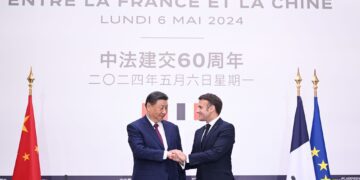

































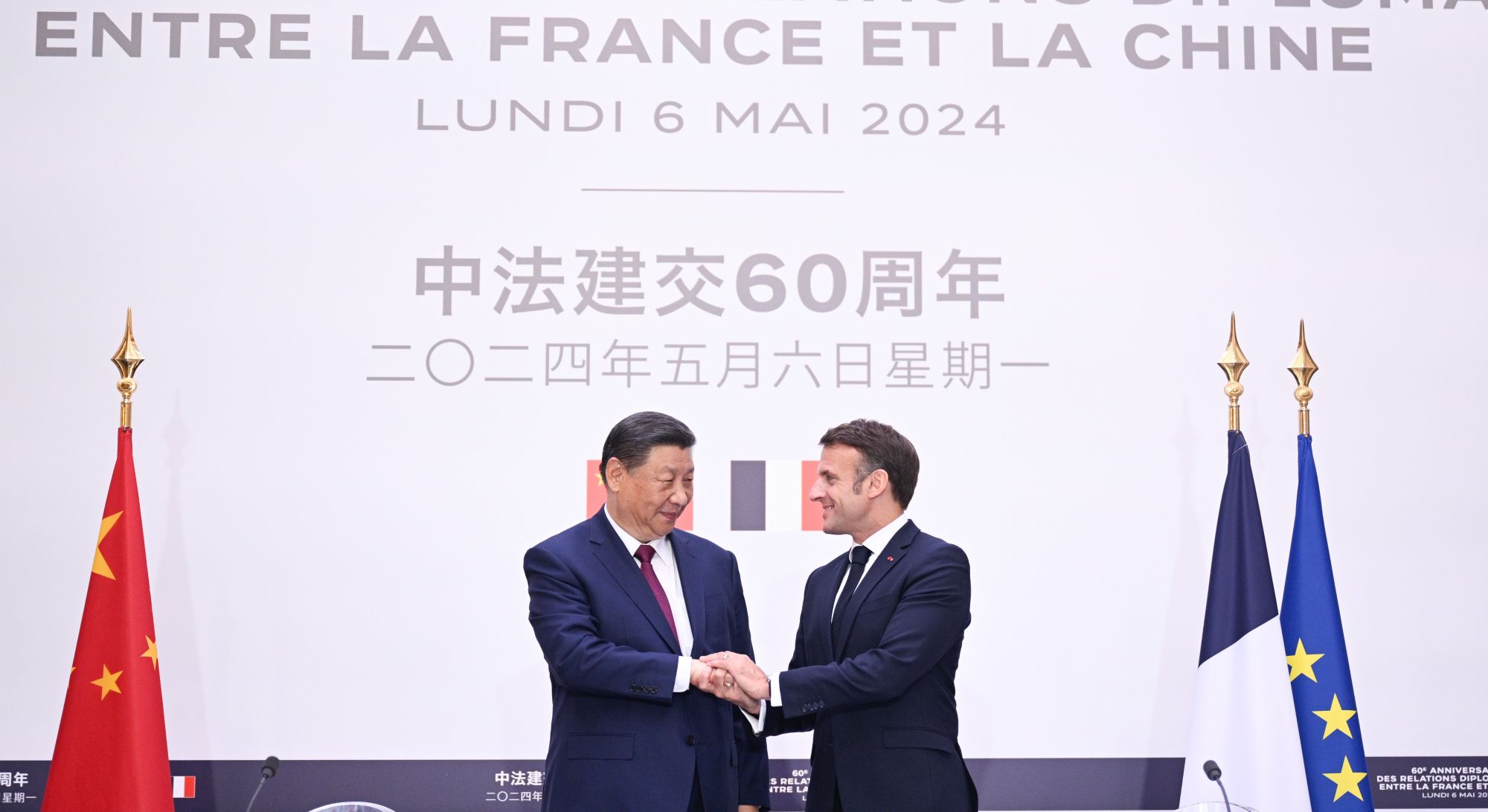
French President Emmanuel Macron arrived in Beijing late on Wednesday, December 3, 2025, kicking off a critical three-day state visit aimed at two central objectives: enlisting China’s help in pressuring Russia toward a ceasefire in Ukraine and tackling the massive trade deficit currently draining the European economy.
The latest update confirms Macron and his wife, Brigitte, were greeted by Foreign Minister Wang Yi upon arrival, with the substantive high-level talks with Chinese President Xi Jinping scheduled for tomorrow at the Great Hall of the People.
Macron’s visit is highly consequential, especially coming days after he met with Ukrainian President Volodymyr Zelenskyy in Paris to discuss potential ceasefire terms.
The core diplomatic objective, according to a French diplomatic official, is to convince and influence Beijing to lean on Moscow, urging Russia and President Vladimir Putin to agree to a ceasefire as quickly as possible and to consolidate that ceasefire through negotiations that include solid security guarantees for Ukraine.
Paris expects Xi to ensure China “refrain[s] from providing Russia with any means whatsoever to continue the war,” referencing Western intelligence concerns that Beijing has supplied dual-use technologies that aid Russia’s war effort.
Beijing’s official position, reiterated by Foreign Ministry spokesperson Mao Ning, is that China supports “dialogue and negotiation” and has played a “constructive role” in promoting a political resolution. However, China has consistently refused to condemn Russia’s 2022 invasion.
Economic rebalancing is the second pillar of the visit, reflecting deep European frustration with the trade relationship.
The 27-nation European Union runs a massive trade deficit with China, exceeding €300 billion ($348 billion) last year, with China alone accounting for 46% of France’s total trade deficit.
Macron will advocate for an agenda of cooperation aimed at achieving a balance that ensures “fair and reciprocal market access.” France is pushing for China to consume more and export less and to facilitate market access for French exports, particularly in energy, food, and aviation, where several agreements are expected to be signed.
Unlike previous trips where European Commission President Ursula von der Leyen accompanied him, Macron is making this a strictly bilateral visit but will report back to EU partners, acting as an EU “envoy” on trade issues.
Macron’s three-day, two-city tour is packed with high-level meetings and personal touches. Today (Wednesday), a cultural visit to the renovated 18th-century Qianlong Garden complex in the Forbidden City is anticipated.
On Thursday, formal talks with President Xi Jinping at the Great Hall of the People, followed by a Franco-Chinese business forum and meetings with Premier Li Qiang is expected to ensue.
While a a final, symbolically important stop in Chengdu in Sichuan province, which the French presidency has described as “quite exceptional in Chinese protocol” is slated for Friday.
The visit is a crucial test of whether Macron’s blend of personal diplomacy and hard economic talk can yield any movement from Beijing on the two most pressing global crises.