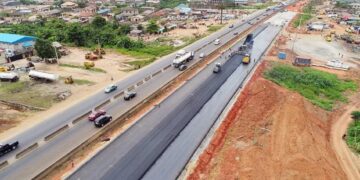

































































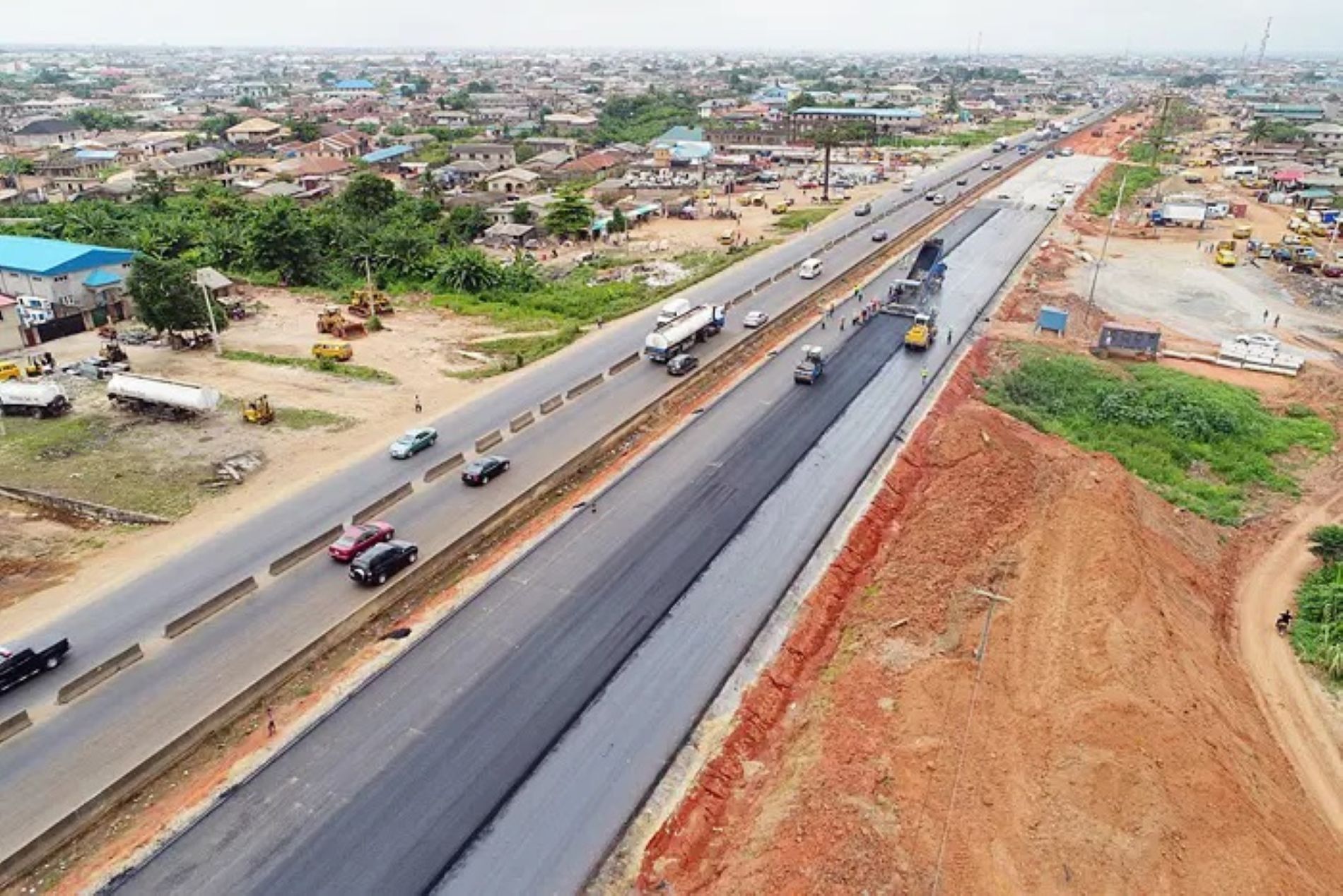
The Lagos State Government has announced a four-week partial closure of the Lagos–Abeokuta Expressway to allow the Federal Ministry of Works to rehabilitate failed sections of the heavily trafficked highway. The closure is scheduled to begin on Wednesday, 11 February 2026, and end on Wednesday, 11 March 2026.
The Commissioner for Transportation, Mr. Oluwaseun Osiyemi, disclosed the plan on the Lagos State Ministry of Transportation’s X handle on Tuesday, highlighting that the repairs will cover the stretch from U-Turn Bus Stop to Sango Tollgate, affecting both inbound and outbound lanes.
To minimize traffic congestion, the rehabilitation project will be carried out in two phases.
- Phase One (11 February – 04 March 2026) will focus on the Abeokuta-bound lanes, from U-Turn Bus Stop to Sango Tollgate. Traffic heading toward Abeokuta/ Sango Tollgate will be redirected to one half of the carriageway, approximately 20 meters away from the active construction area. Work will proceed lane by lane, with traffic shifted to the completed section once the first half is finished. Lagos-bound traffic will continue to flow freely during this phase.
- Phase Two (04 March – 11 March 2026) will target the Lagos-bound lanes, covering the stretch from Obadeyi Bus Stop to Ekoro Junction. Abeokuta-bound traffic will maintain uninterrupted flow while Lagos-bound motorists are diverted to one half of the road, again about 20 meters from the work zone. As in Phase One, work will progress in halves to ensure completed sections are available for traffic.
Osiyemi assured motorists that adequate traffic management and safety measures would be deployed throughout the construction period. He advised commuters to plan journeys carefully, obey traffic signage, and cooperate with traffic officials. Appealing for patience and understanding as these essential repairs progress to ensure the safety of all road users.
The move aligns with ongoing infrastructure improvement initiatives across major federal highways in Lagos and its environs, aimed at reducing accidents and improving the flow of traffic on key commuter routes.
Motorists are encouraged to anticipate delays and consider alternative routes where possible, particularly during peak hours, while the rehabilitation works are ongoing.