

























































The Independent National Electoral Commission (INEC) has requested a total of N873.78 billion to conduct Nigeria’s 2027 general elections, while also proposing N171 billion for its operational budget in the 2026 fiscal year.
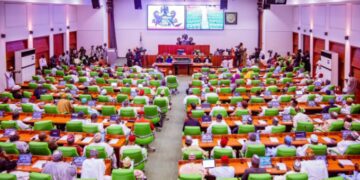
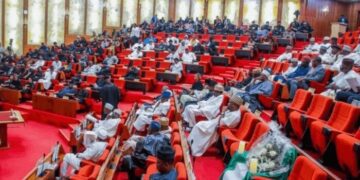
The request was presented to the National Assembly during a budget defence session before the Joint Committee on Electoral Matters in Abuja, where the commission outlined projected election and administrative costs for the coming cycle.
INEC said the proposed N873.78 billion election budget represents a substantial rise compared with the N313.4 billion released by the Federal Government for the 2023 general elections, reflecting expanded operational, technological, and logistics requirements.
INEC leadership told lawmakers that the projected election cost is structured across five major spending areas:
N379.75bn — Operational costs
N92.32bn — Administrative costs
N209.21bn — Technology-related costs
N154.91bn — Election capital costs
N42.61bn — Miscellaneous expenses
According to the commission, the estimate was prepared in compliance with provisions of the Electoral Act 2022, which requires INEC to submit its election budget at least one year ahead of a general election.
INEC also clarified that the projection does not yet include a separate request from the National Youth Service Corps (NYSC) seeking higher allowances for corps members deployed as ad hoc election staff.
For the 2026 fiscal year, INEC proposed N171 billion to fund routine and statutory activities, including by-elections and off-cycle governorship polls. The breakdown includes:
N109bn — Personnel costs
N18.7bn — Overheads
N42.63bn — Election-related activities
N1.4bn — Capital expenditure
The commission noted that the Ministry of Finance issued a lower budget envelope of N140 billion, but argued that the cap does not adequately reflect its statutory responsibilities and unpredictable election timetable.
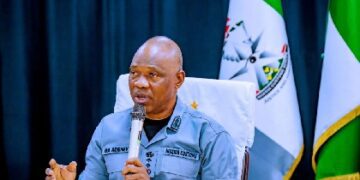
INEC Chairman Mahmood Yakubu told lawmakers that the envelope budgeting system limits the commission’s flexibility, stressing that election management often requires urgent and time-sensitive funding decisions. He also cited the lack of a dedicated communications network as a continuing operational challenge, saying a commission-owned network would improve transparency and accountability during elections.
During the session, Adams Oshiomhole argued that external budget controls should not constrain INEC, given the sensitivity and constitutional importance of its mandate. He urged lawmakers to move away from the envelope budgeting model and support the commission’s full proposal to prevent underfunding.
Similarly, House of Representatives member Billy Osawaru called for INEC’s budget to be placed on first-line charge, as provided in the Constitution, with full and timely releases to enable early and effective preparations for 2027.
The joint committee subsequently recommended a one-time release structure for the commission’s annual budget and said it would review the NYSC’s separate request of about N32 billion to raise allowances for corps members engaged in election duties to N125,000.
Chairman of the Senate Committee on INEC, Simon Lalong, assured the commission of legislative cooperation to ensure credible and successful elections in 2027.
On the House side, Electoral Matters Committee Chairman Bayo Balogun pledged support but advised the commission to avoid operational promises it may not be able to fulfil. He referenced the 2023 elections and the rollout of the INEC Result Viewing portal, noting that certain expectations created around real-time result uploads were not explicitly grounded in the Electoral Act but in INEC regulations.
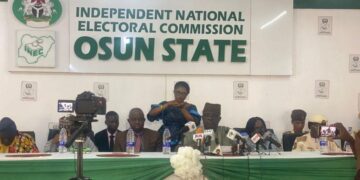
Nigeria’s next general elections are scheduled for 2027. Before then, Ekiti and Osun states are due to hold governorship elections, alongside polls in the Federal Capital Territory and a series of by-elections, all of which form part of INEC’s near-term funding and logistics projections.