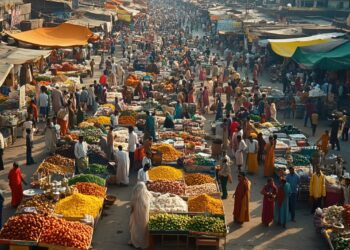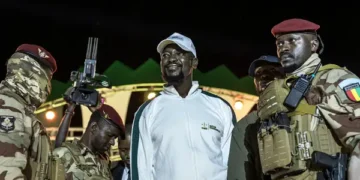



















































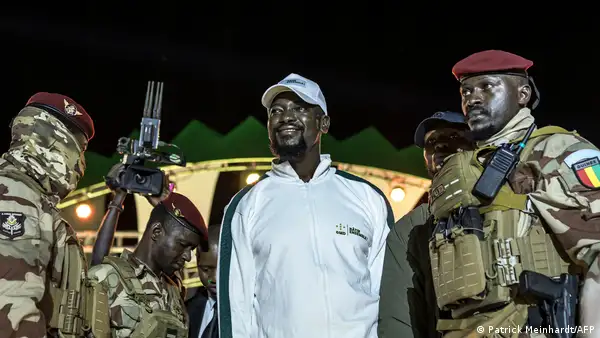
Guineans have headed to the polls today, Sunday, 28 December 2025, in a historic presidential election that is widely expected to transition the country from military to civilian rule, with the current junta leader, General Mamady Doumbouya, as the overwhelming favourite to win.
The vote marks the culmination of a four-year transition period that began when Doumbouya ousted President Alpha Condé in a September 2021 coup.
Despite early promises not to contest, Doumbouya is running as an independent candidate under a new constitution approved by a national referendum in September 2025.
Doumbouya faces eight other candidates, but analysts describe the field as “hollowed out.” The two most formidable challengers, longtime opposition leader Cellou Dalein Diallo and former President Alpha Condé, remain in exile and were effectively barred from participating.
His closest active rival is Yero Baldé of the Democratic Front of Guinea, a relatively low-profile former education minister who has struggled to gain traction against the incumbent’s state-backed machinery.
Doumbouya’s popularity has been bolstered by a surge in resource nationalism. Just weeks before the election, Guinea celebrated the first commercial shipments of iron ore from the massive Simandou project, a 30-year-old development that the junta successfully pushed into production
“For us young people, Doumbouya represents the opportunity to send the old political class into retirement.” says Mohamed Kaba, a local voter in Conakry.
Key election facts include a new mandate of seven years (extended from five years under the new constitution); a 9-canidate line up; over 45,000 security personnel deployed to polling stations nationwide, and 62 observers from the African Union (AU) are on the ground, led by former Burundian President Domitien Ndayizeye.
However, while the streets of Conakry have remained largely peaceful today, rights groups and international observers have raised significant red flags.
For instance, major private media outlets were restricted during the campaign period; more than 50 political parties were dissolved earlier this year in a “cleanup” of the political chessboard; and the General Directorate of Elections remains under direct government supervision, leading to claims by the opposition that the results have been “prepared in advance.”
Polls are expected to close at 6:00 PM local time with the electoral commission, expected to begin releasing results by 30 December 2025.
The African Union mission will issue its preliminary statement on the conduct of the vote on Tuesday.