
















































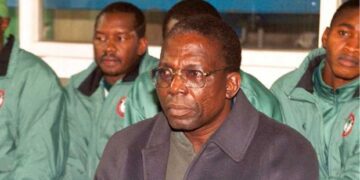






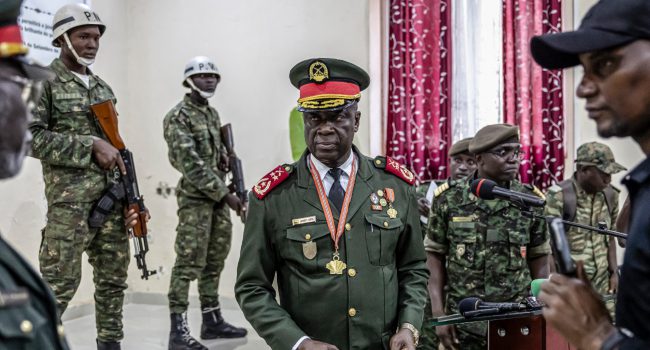
The ruling military junta in Guinea‑Bissau has released opposition leader and former Prime Minister Domingos Simões Pereira, saying it plans to form an inclusive transitional government amid ongoing pressure to return the country to civilian rule.
Pereira, leader of the African Party for the Independence of Guinea and Cape Verde (PAIGC), had been detained following a coup in November 2025 that toppled President Umaro Sissoco Embaló and disrupted both presidential and legislative elections. Although freed, Pereira remains under house arrest pending investigation on separate economic crime allegations, authorities said.
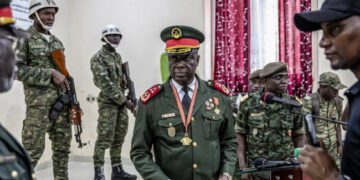
In a letter addressed to the Economic Community of West African States (ECOWAS) and distributed to journalists over the weekend, Major‑General Horta Inta‑a, installed as interim president after the coup, outlined plans to create a transitional government that would share power among the main political factions. The proposed structure would allocate three ministerial positions each to PAIGC and the Party for Social Renewal (PRS), whose leader, Fernando Dias, had been a leading challenger in the thwarted election and had taken refuge in the Nigerian embassy before being cleared of arrest.
The announced power‑sharing arrangement also includes wider representation on a National Transition Council, with representatives from both blocs to help steer the country toward a new political order. ECOWAS has welcomed the measures as steps toward an inclusive political environment and urged the junta to complete the release of political prisoners and move quickly toward restoring constitutional rule.
Guinea‑Bissau’s November takeover, one of several coups in West and Central Africa over the past five years, halted elections after ballots and electoral data were seized or destroyed, according to the nation’s electoral commission. A new presidential and legislative poll has since been scheduled for December 6, 2026, by presidential decree.
The developments reflect ongoing efforts by regional bodies such as ECOWAS to negotiate a return to civilian governance in a country with a long history of political instability, even as uncertainty remains over how swiftly and inclusively a transition can be delivered.