















































































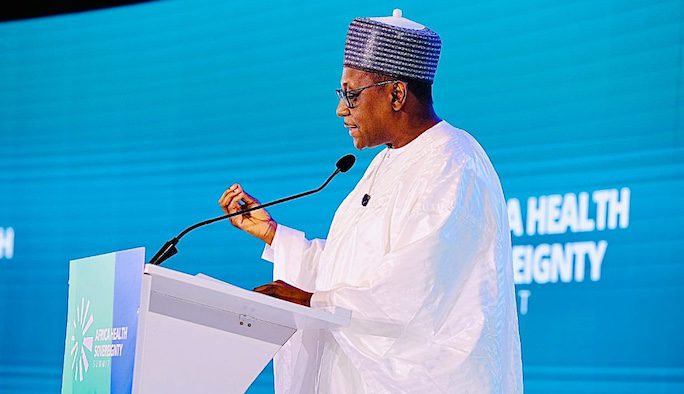
The Federal Government has authorized the disbursement of ₦32.9 billion to revitalize primary healthcare across the 36 states and the Federal Capital Territory. The announcement was made following the 13th Ministerial Oversight Committee (MOC) meeting of the Basic Health Care Provision Fund (BHCPF).
While the approval was formalized this week, the Coordinating Minister of Health and Social Welfare, Prof. Muhammad Ali Pate, clarified that the actual fund transfer to health facility accounts will commence in January 2026.
This disbursement marks the first time the government is implementing the BHCPF 2.0 Guidelines, which shift away from a “flat-rate” system to one based on actual workload.
Consequently, Primary Health Centers (PHCs) with high patient traffic will now receive ₦800,000 per quarter and smaller clinics will receive ₦600,000 per quarter.
The money is sent directly from the CBN to the commercial bank accounts of over 8,000 functional PHCs nationwide, bypassing state bureaucracies to ensure it reaches the grassroots.
More so, to prevent the diversion of funds, a recurring issue in local government administration, the Ministry has introduced several “fail-safe” mechanisms like, a newly approved platform where Nigerians can report drug shortages, staff absenteeism, or poor facility conditions directly to the Ministry; a strategy that ensures states submit a list of all healthcare beneficiaries verified with their National Identification Numbers (NIN) by the end of this month; and to ensure traceability of services Ward Development Committees (WDCs), including traditional rulers and youth leaders, are empowered to co-sign the spending plans of their local clinics.
The Ministry shared encouraging data from the current year to justify the continued investment such as, patient visits to PHCs quadrupling in the first half of 2025 compared to 2023 levels; a recorded 12% reduction in maternal mortality at the facility level since the BHCPF reforms began, and that over 11,000 critical patients were transported for free via the National Emergency Medical Service and Ambulance System (NEMSAS) last quarter.
Minister Pate also noted that while funding is stabilizing, the pace of progress remains a concern. In 2026, the focus will shift toward “accelerated impact,” specifically targeting the revitalisation of an additional 5,000 PHCs to bring the total to 13,000 functional facilities by the end of next year.