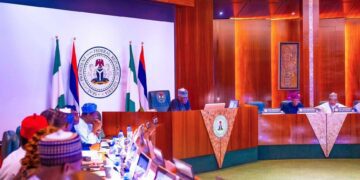






















































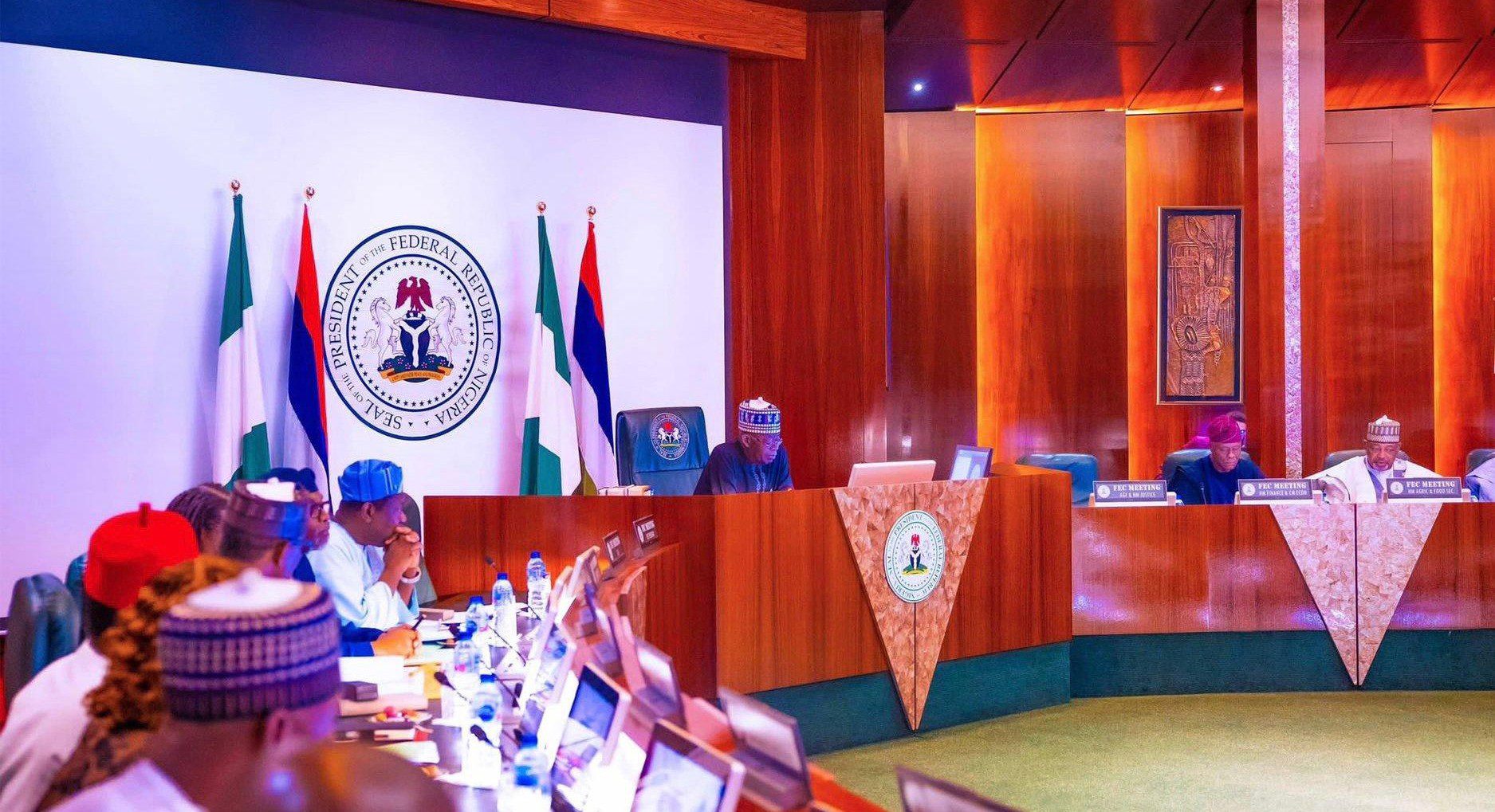
The Federal Executive Council (FEC) has officially approved a ₦58.47 trillion draft budget for the 2026 fiscal year. The decision was reached during an emergency meeting held today, Friday, December 19, 2025, at the Presidential Villa, Abuja.
This 2026 Appropriation Bill represents a significant 6.1% increase over the 2025 budget estimates and is anchored on a revised strategy to stabilize the Naira and prioritize completing existing infrastructure.
In a notable shift from previous projections, the government has adopted a more optimistic stance on the currency for the coming year.
The FEC approved a downward revision of the budget’s exchange rate benchmark to ₦1,400 per $1. This is a significant improvement from the ₦1,512/$1 originally proposed in the Medium-Term Expenditure Framework (MTEF).
Minister of Budget and Economic Planning, Senator Atiku Bagudu, explained that the adjustment reflects the administration’s belief that ongoing macroeconomic reforms are successfully stabilizing the Naira.
The budget aligns with a target to pull inflation down toward the 16.5%–18% range in 2026, supported by tighter coordination between fiscal and monetary policies.
2026 Budget Breakdown: Where the Money Goes
The ₦58.47 trillion aggregate expenditure is distributed across several critical pillars:
| Category | Allocation | Note |
| Debt Service | ₦15.52 Trillion | Includes ₦318.8 billion for a sinking fund to retire maturing bonds. |
| Personnel Costs | ₦10.75 Trillion | Covers wages and pensions; 7% higher than 2025 due to the new minimum wage. |
| Statutory Transfers | ₦4.1 Trillion | Funds for the Judiciary, INEC, and NDDC. |
| Retained Revenue | ₦34.33 Trillion | Reflects a shift where non-oil revenue now accounts for 2/3 of receipts. |
| Fiscal Deficit | ₦20.1 Trillion | Estimated at 3.61% of GDP; to be financed mainly via domestic borrowing. |
The Budget Office has directed MDAs to roll over 70% of 2025 capital projects into the 2026 budget. No new projects are permitted, as the focus is squarely on completing the backlog of ongoing works.
The council maintained a conservative oil production benchmark of 1.8 million barrels per day (mbpd), despite an industry target of 2.06 mbpd. The oil price is pegged at $64.85 per barrel.
A central priority is the Renewed Hope Ward Development Plan, which aims to deliver specific infrastructure and social projects directly to all 8,809 political wards across Nigeria.
The government has earmarked significant funds to upgrade security training institutions, following an assessment that nearly $100 billion is needed over the long term to modernize the nation’s security architecture.
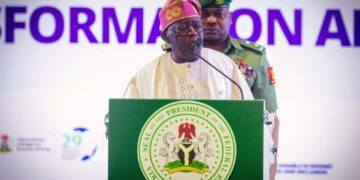
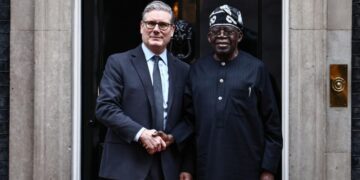
President Tinubu is expected to formally present this ₦58.47 trillion proposal to a joint session of the National Assembly later this evening or early next week.