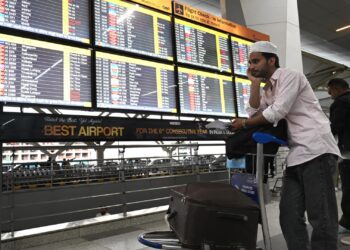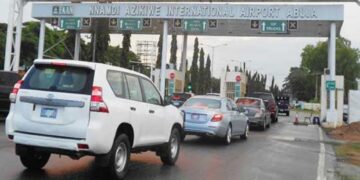















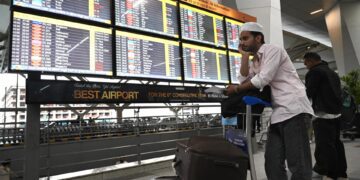





















































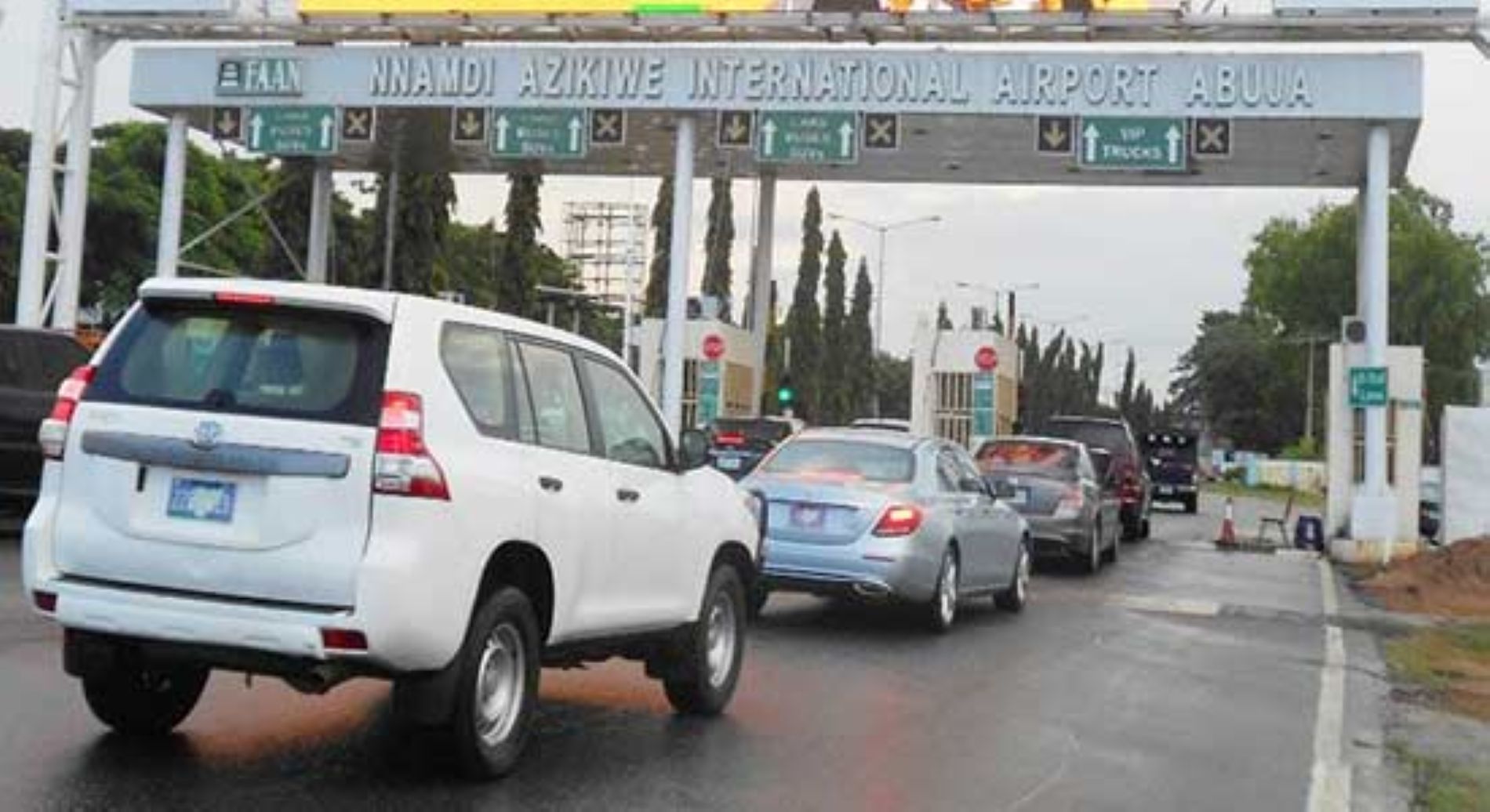
Local and international travellers were forced to abandon their vehicles and trek into the terminal on Tuesday following severe traffic congestion caused by the full enforcement of the Federal Airports Authority of Nigeria’s (FAAN) cashless payment policy at the Nnamdi Azikiwe International Airport.
The rollout of the “Operation Go Cashless” directive led to long queues of vehicles stretching from the airport toll gate, leaving many passengers scrambling to catch scheduled flights.
Policy Enforcement Sparks Chaos
The disruption followed FAAN’s implementation of a directive mandating fully electronic payments at all airport revenue points, including access gates, car parks, VIP lounges and protocol services.
The Federal Airports Authority of Nigeria had announced about six months ago that all payments at its facilities would become fully electronic beginning September 2025. The agency described the move as part of efforts to modernize airport operations, enhance transparency and align Nigeria’s aviation sector with global digital standards.
However, the enforcement remained largely inactive until February 2026, when FAAN disclosed that the Federal Government would fully activate the cashless policy from March 1, 2026, to block revenue leakages. The current exercise marks the first full-scale implementation of the directive in Abuja.
Dedicated Payment Card Requirement
Airport users are now required to obtain a dedicated FAAN electronic payment card, which must be registered, funded and scanned at entry points.
Although some motorists attempted to pay using commercial bank ATM cards or Point-of-Sale (POS) terminals, many complained of repeated transaction failures and slow processing times. The delays have resulted in massive gridlock at the airport entrance.
Eyewitnesses reported that several stranded travellers were seen dragging their luggage on foot from the toll gate after abandoning their vehicles in a desperate attempt to avoid missing their flights.
Experts Fault Rollout Strategy
Aviation stakeholders argue that the crisis exposes deeper structural flaws, accusing authorities of prioritizing revenue enforcement over operational realities.
Olumide Ohunayo, an aviation analyst, said traffic engineering and commuter behaviour should have been central considerations before implementation.
“When this policy was coming up, the first thing that should have been on the table was how traffic would flow seamlessly. In this case, revenue came before traffic flow, and that’s why you’re having a bottleneck,” he said.
He added that while the cashless initiative aims to improve transparency and efficiency, the rollout ignored key issues such as traffic management, peak-hour pressure and infrastructure constraints.
Social Media Backlash
The development has sparked widespread reactions on social media, with many Nigerians criticizing the execution rather than the policy itself.
Some users described the situation as poorly planned, arguing that digital payment systems at high-traffic toll points require rapid-response technology capable of processing vehicles within seconds.
Others suggested a phased implementation, allowing both cash and electronic payments during a transition period to prevent chaos.
As of press time, traffic into the Abuja airport remained slow, with security personnel and traffic officials struggling to manage the backlog.
The incident has reignited debate over policy implementation in Nigeria, with calls for authorities to balance reform objectives with practical execution to avoid unnecessary disruption for travellers.