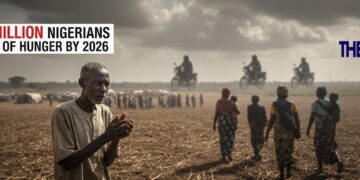












































































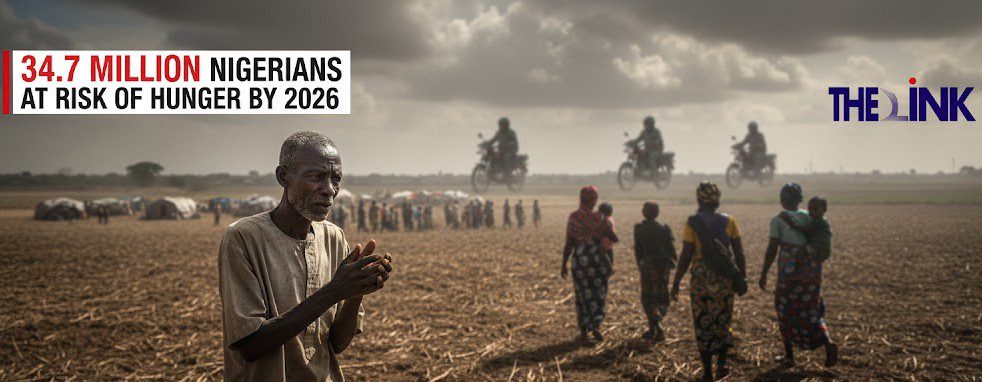
The escalating insecurity, characterized by banditry, mass abductions, and terrorist attacks using advanced weapons, has triggered a severe food security crisis, with experts and UN agencies issuing stark warnings that nearly 35 million Nigerians could face acute food insecurity by the middle of 2026.
The crisis is rooted in the systematic breakdown of agriculture across Nigeria’s food production zones, directly linking the security emergency to a looming humanitarian catastrophe.
The most recent Cadre Harmonisé (CH) food security analysis, supported by the UN World Food Programme (WFP) and the Food and Agriculture Organization (FAO), projects the highest levels of severe hunger ever recorded in Nigeria.
An estimated 34.7 million to 35 million people are projected to be in Crisis (CH Phase 3) or worse levels of food insecurity during the next lean season (June to August 2026).
The crisis is most acute in the conflict zones of the North-East (Borno, Adamawa, Yobe) and the North-West (Sokoto, Zamfara), where nearly six million people are expected to face Crisis levels or worse.
The primary driver of the impending hunger crisis is the direct impact of violence on rural farming communities:
| Factor | Impact on Food Production |
| Farmland Abandonment | Widespread attacks have forced over 200,000 farmers to abandon their land and flee their homes. The Northern Governors Forum estimates that up to 60% of farmlands in key agricultural states are severely underutilized. |
| Displacement | Conflict has displaced millions, turning food producers into food consumers, and placing immense pressure on fragile resources in host communities. |
| High Input Costs | The cost of essential farming inputs like fertilizers and agrochemicals has surged by over 56%, discouraging farmers from participating in the dry-season farming, further guaranteeing reduced future output. |
| Criminal Extortion | Farmers who dare to return to their fields face ambushes, crop burning, and being forced to pay levies or “taxes” to bandits to access their land. |
Despite the overall national GDP growing by $3.98\%$ (driven by ICT and Financial Services), the lack of security in the agricultural sector is eroding the gains. High transport costs, the volatile Naira, and the scarcity created by violence mean that staple food prices remain painfully high, eroding the purchasing power of the average household.
Additionally, malnutrition rates among children are highest in Borno, Sokoto, Yobe, and Zamfara. The situation has deteriorated from “serious” to “critical” in many areas, with experts warning of lifelong consequences for children and pregnant women.
The World Food Programme (WFP) has warned that it will run out of resources for emergency food and nutrition assistance by December unless urgent funding is secured, leaving millions without a critical lifeline in 2026.
The Northern Governors’ desperate call for a six-month mining ban and the creation of a ₦1 billion monthly security fund must be viewed through the lens of this looming food crisis. The governors understand that the insecurity-for-profit economy is literally starving their people.
The ultimate success of the national security overhaul declared by President Tinubu will be measured not just by the defeat of terrorists but by the ability of displaced farmers to safely return to their farmlands before the 2026 planting season begins. Failure to do so will solidify the worst hunger crisis in Nigeria’s modern history.