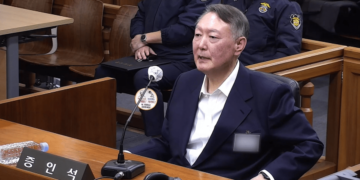



























































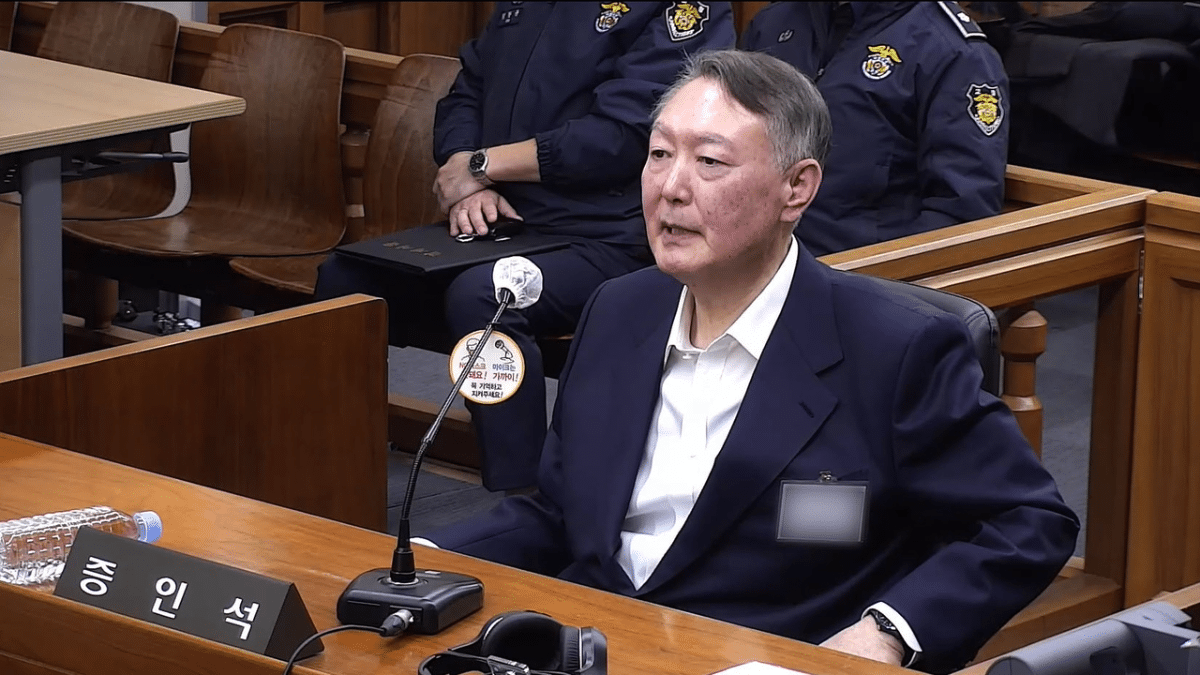
A South Korean court has sentenced former president Yoon Suk Yeol to life imprisonment after finding him guilty of insurrection and abuse of power, in a landmark ruling that marks one of the most dramatic political downfalls in the country’s modern democratic history.
The verdict, delivered by the Seoul Central District Court on Tuesday, followed months of high-profile proceedings centred on allegations that Yoon attempted to undermine constitutional order and interfere with state institutions during a period of intense political unrest.
Prosecutors accused Yoon of orchestrating actions that amounted to insurrection by allegedly mobilizing state authority in a bid to subvert lawful governance processes. The indictment also included abuse of power and related offences under South Korea’s Criminal Act.
In its ruling, the court said the former leader’s actions constituted a “serious violation of constitutional order” and posed a threat to democratic governance.
“The defendant’s conduct undermined the rule of law and the stability of the state,” the presiding judge said in a summary of the decision.
Legal analysts described the life sentence as one of the most severe ever imposed on a former South Korean president, reflecting the gravity of the charges.
Yoon, a former prosecutor-general who won the presidency in 2022, had faced mounting political pressure amid escalating tensions between his administration and opposition parties in the National Assembly.
The case has deepened divisions within South Korea’s political landscape, with supporters describing the prosecution as politically motivated while critics argue the ruling reinforces the strength of democratic accountability.
Outside the courthouse, both supporters and opponents gathered in large numbers, prompting heightened security measures in central Seoul.
South Korea has a history of prosecuting former leaders, including former presidents who have faced convictions for corruption and abuse of office. However, convictions on insurrection-related charges are rare and carry significant constitutional weight.
The ruling is expected to be appealed to a higher court, and legal experts say the appellate process could take months.
The conviction comes at a sensitive time for South Korea’s foreign relations, including its security alliance with the United States and regional tensions involving North Korea. Observers say political stability in Seoul remains critical for broader regional security dynamics.
Despite the upheaval, government officials sought to reassure the public and international partners that institutions remain functional and constitutional processes continue uninterrupted.
Yoon’s legal team has indicated it will appeal the verdict. Under South Korean law, life imprisonment can be reduced or overturned if an appellate court finds procedural or evidentiary errors.
Meanwhile, the presidency remains under acting leadership pending the next electoral process, as stipulated by the constitution.
The case underscores South Korea’s assertive judicial approach toward former heads of state and highlights the continuing evolution of democratic accountability in Asia’s fourth-largest economy.