











































































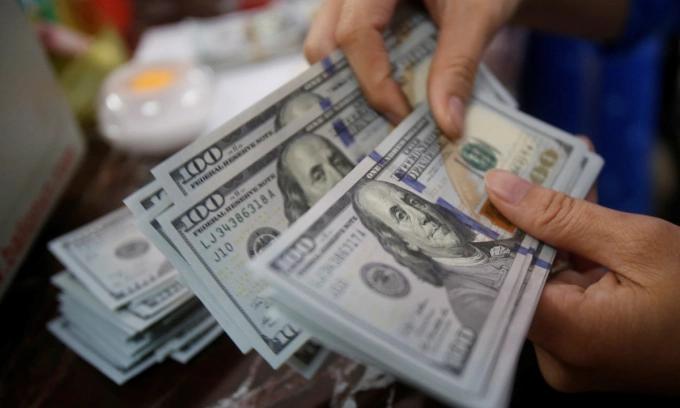
The U.S. dollar was on track for its strongest weekly performance since October on Friday, buoyed by rising geopolitical tensions in the Middle East and renewed demand for safe-haven assets.
Investors flocked to the greenback as concerns mounted over escalating hostilities in the region, triggering volatility across currency, commodity and equity markets. The dollar index, which measures the U.S. currency against a basket of major peers including the euro, yen and pound, advanced steadily throughout the week, positioning it for its largest weekly gain in nearly four months.
Market participants said heightened uncertainty surrounding developments in the Middle East prompted investors to scale back exposure to riskier assets and shift funds into traditionally safer holdings, including the U.S. dollar and U.S. Treasuries.
Tensions in the region have fueled fears of broader instability that could disrupt energy supplies and global trade routes. Oil prices rose earlier in the week on supply concerns, though gains were partially tempered by profit-taking and caution ahead of key diplomatic engagements.
Currency analysts noted that in periods of geopolitical stress, the dollar typically strengthens due to its role as the world’s primary reserve currency and the depth of U.S. financial markets.
Risk-sensitive currencies, including those tied to emerging markets and commodity exports, weakened against the dollar as investors reduced exposure. The Japanese yen and Swiss franc also saw gains at various points during the week, reflecting broader defensive positioning.
Meanwhile, the euro and British pound struggled to maintain momentum amid mixed economic data from Europe and persistent questions over growth prospects.
Beyond geopolitical concerns, traders are also closely watching signals from the U.S. Federal Reserve regarding the path of interest rates. While recent economic indicators have shown resilience in the U.S. economy, policymakers have maintained a cautious tone, emphasizing data dependency.
Higher-for-longer interest rate expectations have further supported the dollar by increasing the yield advantage of U.S. assets compared with those in other major economies.
Analysts warn that currency markets may remain volatile in the coming days as developments in the Middle East unfold and investors assess potential spillover effects on energy markets and global inflation.
Should tensions ease, some of the dollar’s recent gains could unwind. However, if instability persists or escalates, safe-haven flows are likely to continue underpinning the U.S. currency in the near term.
For now, the dollar appears poised to close the week with its strongest performance since October, reflecting investor caution in an increasingly uncertain global environment.