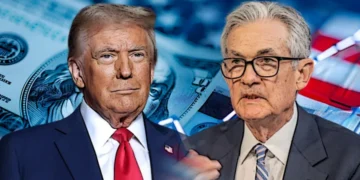















































































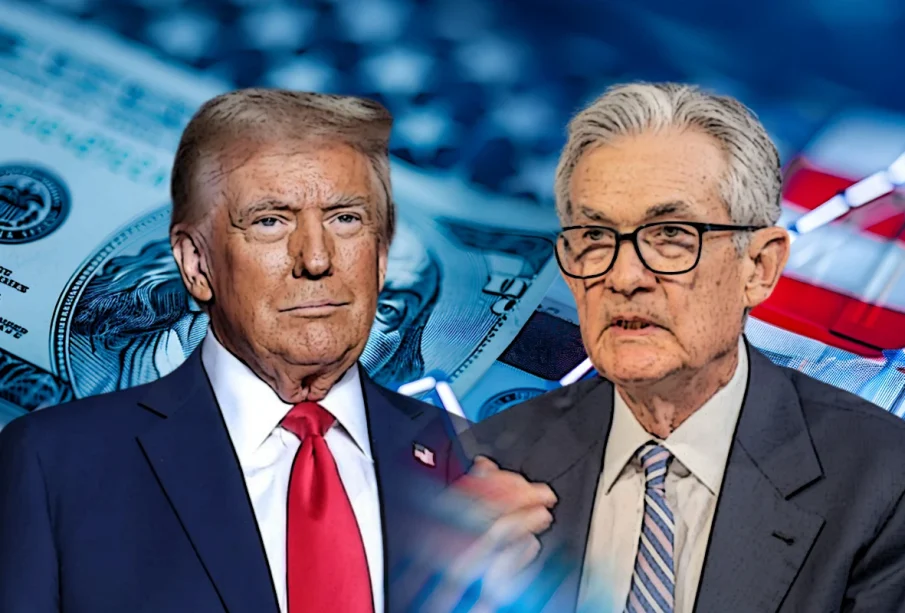
The U.S. Dollar faced a sharp sell-off today, Monday, 12 January 2026, as global investors reacted with alarm to a weekend revelation from Federal Reserve Chair Jerome Powell. In an unprecedented video statement released Sunday, Powell disclosed that the Department of Justice (DOJ) has served the Fed with grand jury subpoenas, threatening him with a criminal indictment.
The move, which many analysts characterize as a “red alert” for institutional stability, has sent capital fleeing toward traditional safe havens, such as the Swiss franc and Gold.
The DOJ investigation officially centers on Powell’s June 2025 testimony regarding a multi-billion-dollar renovation of the Federal Reserve’s headquarters in Washington, D.C.
Allies of the Trump administration, including OMB Chair Russell Vought, have accused Powell of “ostentatious” spending and potentially misleading Congress about the project’s scale.
In his statement, Powell dismissed the renovation probe as a “pretext,” arguing the threat of criminal charges is actually retaliation for the Fed’s refusal to slash interest rates according to the President’s preferences.
“This is about whether the Fed will be able to continue to set interest rates based on evidence and economic conditions, or whether instead monetary policy will be directed by political pressure or intimidation.” – Jerome Powell.
The dollar’s status as a reliable global reserve currency was questioned today, leading to significant shifts across major asset classes:
| Asset | Movement | Context |
| USD Index | -0.37% | Snapped a five-day winning streak; recently at 98.75. |
| Swiss Franc | +0.52% | The day’s best performer; trading near 0.79 per USD. |
| Euro | +0.44% | Rose to $1.1688, its biggest daily gain since December. |
| Spot Gold | +2.00% | Blasted through a new record high of $4,600/oz. |
U.S. stock futures (S&P 500) slipped 0.6% in Asian and European trading sessions.8 Investors are increasingly wary that the escalating feud between the White House and the Fed could lead to “monetary dysfunction,” a term usually reserved for emerging markets.
Economists warn that the “premium” investors pay for U.S. institutional stability is eroding.
With Powell’s term expiring in May 2026, markets are pricing in a high probability that his successor will be a political appointee favoring loose monetary policy, regardless of inflation data.
Democratic leaders, including Senator Elizabeth Warren, have labeled the probe a “wannabe dictator” move, further deepening the political divide and market uncertainty.