





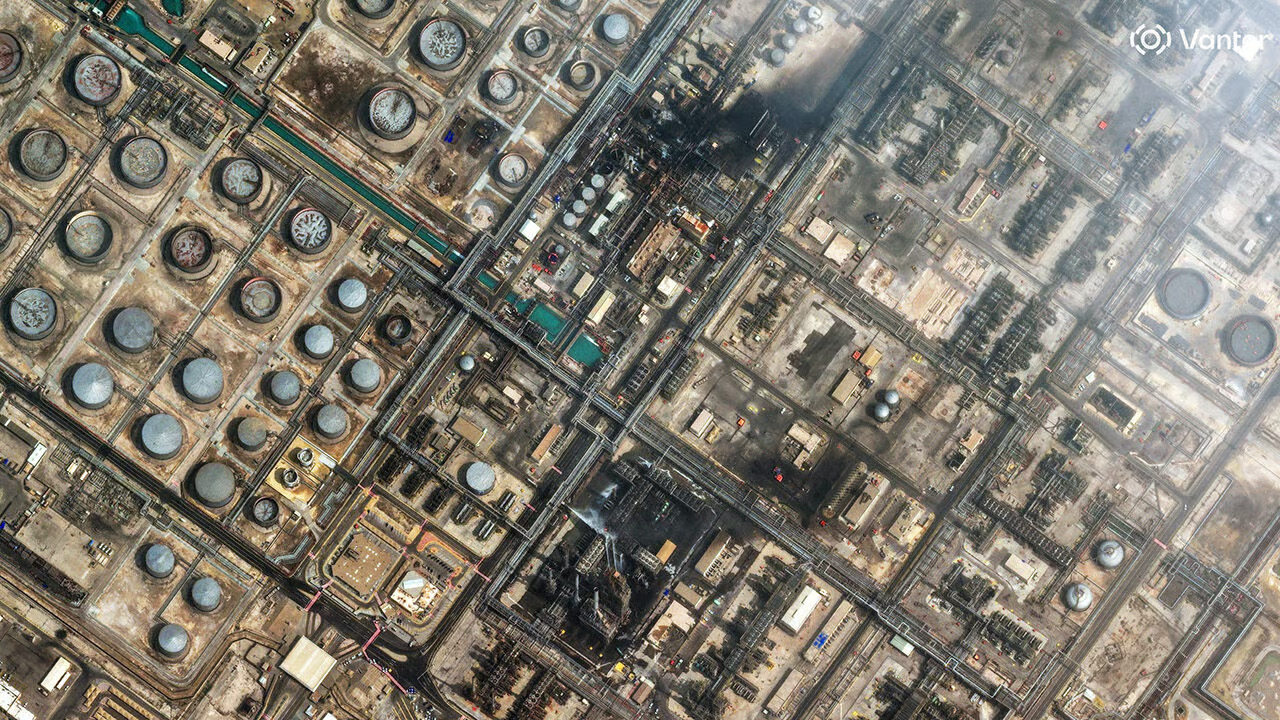

















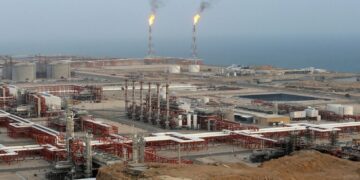


















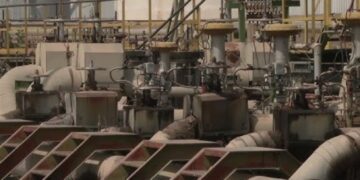































Dangote Petroleum Refinery has expanded its gas supply agreements with the Nigerian National Petroleum Company Limited (NNPC) as part of efforts to secure reliable fuel for its ongoing and planned expansion programmes, industry sources said.
The expanded arrangement will see NNPC supply additional volumes of natural gas to the 650,000-barrel-per-day refinery, supporting increased operations across refining, petrochemicals, and associated industrial facilities at the Lekki Free Trade Zone in Lagos State.
Officials familiar with the deal said the move is aimed at ensuring steady energy supply as the refinery ramps up production and integrates more units into full commercial operation. Natural gas is critical for powering refinery processes, utilities, and ancillary systems.
“The expansion of the gas agreements is about long-term energy security for the refinery,” a senior industry source said. “As production scales up, stable gas supply becomes non-negotiable.”
The new gas arrangements build on an existing commercial relationship between Dangote Group and NNPC, which already supplies crude oil and gas to the refinery under separate agreements. Analysts say the deeper gas partnership underscores NNPC’s role in supporting large-scale domestic refining and industrial projects.
In a statement, NNPC said the expanded supply aligns with its mandate to support Nigeria’s energy security while commercializing the country’s vast gas resources. The company has been pushing to grow domestic gas utilization as part of the federal government’s broader “Decade of Gas” initiative.
Dangote Refinery has gradually increased output since commencing operations, with petrol, diesel, aviation fuel, and other refined products entering the domestic market. The refinery is also linked to petrochemical and fertilizer operations, all of which depend heavily on uninterrupted gas supply.
Industry observers say the expanded gas deal could help stabilize production schedules and reduce reliance on alternative, costlier energy sources, improving efficiency and lowering operating costs.
“This is a critical step for sustainability,” said an energy analyst in Lagos. “Gas availability directly affects throughput, reliability, and the refinery’s ability to meet domestic demand.”
The agreement comes amid Nigeria’s broader push to reduce fuel imports and conserve foreign exchange by boosting local refining capacity. A fully optimized Dangote Refinery is expected to play a central role in reshaping the country’s downstream petroleum sector.
With gas supply secured for expansion, analysts say the refinery is better positioned to increase output, support industrial growth, and contribute to price stability in the fuel market.
Neither Dangote Group nor NNPC disclosed the financial terms or exact volumes under the expanded agreement. However, both sides indicated that the partnership would continue to evolve in line with Nigeria’s energy transition and industrial development goals.
As Nigeria seeks to unlock the full value of its gas reserves, the strengthened Dangote-NNPC collaboration highlights the growing importance of gas as the backbone of large-scale industrial expansion.