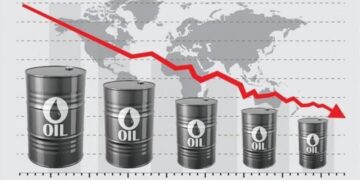












































































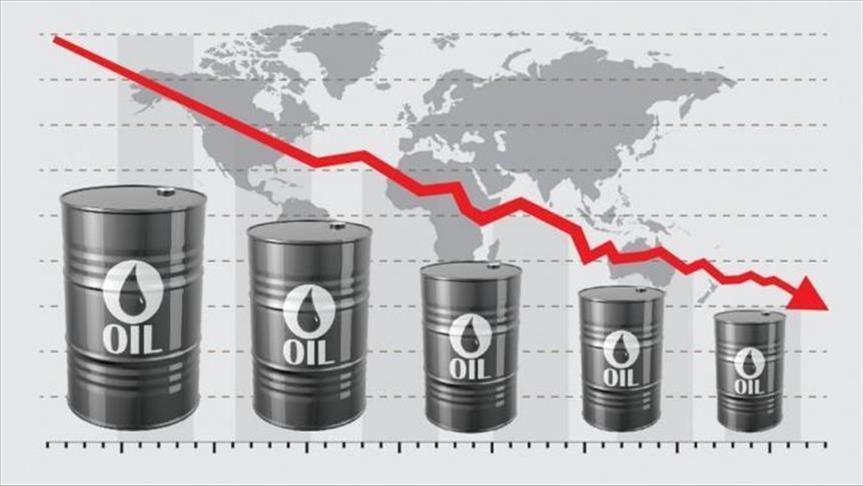
Global oil markets have closed the chapter on 2025 with a definitive thud. Following the final trading session on Friday, 02 January 2026, crude prices settled marginally lower, cementing a year of “punishing” losses that represent the steepest annual decline since the pandemic-induced collapse of 2020.
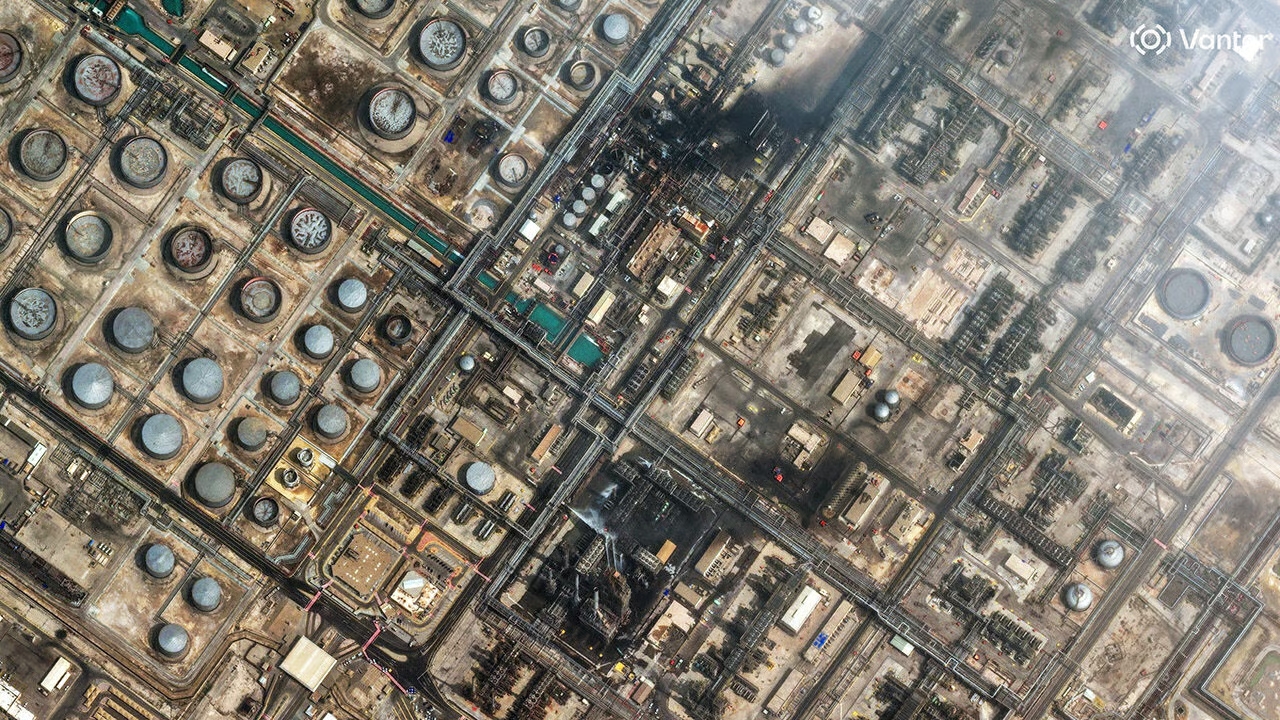
Despite a year punctuated by escalating wars in Ukraine and the Middle East, as well as a U.S. naval blockade on Venezuela, the overwhelming narrative for 2025 was one of “entrenched oversupply.”
Both major benchmarks suffered nearly 20% declines over the course of the year, driven by record production from non-OPEC+ nations and a “market share war” initiated by the OPEC+ alliance.
Brent Crude settled on 02 Jan 2 at $60.75 a barrel (down 18% for the year), and the U.S. WTI at $57.32 a barrel (down 20% for the year), as 2025 marked the third consecutive year of losses for Brent, the longest such losing streak on record.
Traditionally, the conflicts of 2025 would have sent prices skyrocketing. However, the “Trump Factor” and a global production surge effectively blunted these shocks with the U.S., Brazil, and Guyana all pumped at record levels. Hence, the U.S. shale production proving “insensitive” to price drops due to high-level hedging by producers.
Also, earlier in 2025, OPEC+ abandoned its policy of defending prices, releasing roughly 2.9 million barrels per day into the market to reclaim market share from non-OPEC rivals. Adding that the recent Trump-led peace talks between Russia and Ukraine added downward pressure, as traders began pricing in a potential end to energy infrastructure attacks.
Economic slowdowns in Europe and a “fading” post-reopening recovery in China meant global consumption growth (0.7%) was dwarfed by supply growth.
Most analysts, including those from DBS and BNP Paribas, anticipate 2026 will be a “range-bound” year as the market continues to work through a projected surplus of 2 million barrels per day.
All eyes are now on the Sunday, 04 January 2026 OPEC+ meeting. Producers are widely expected to maintain their current “pause” on output hikes to prevent prices from slipping into the $40s.
More so, forecasts for 2026 generally hover between $55 and $65 for Brent, assuming no major supply disruption from the ongoing crisis in the Middle East.