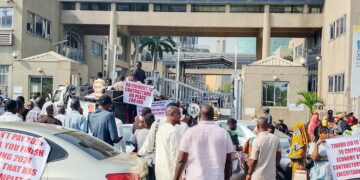































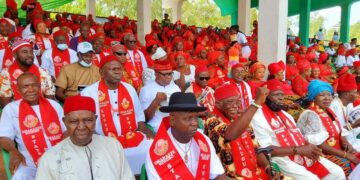






































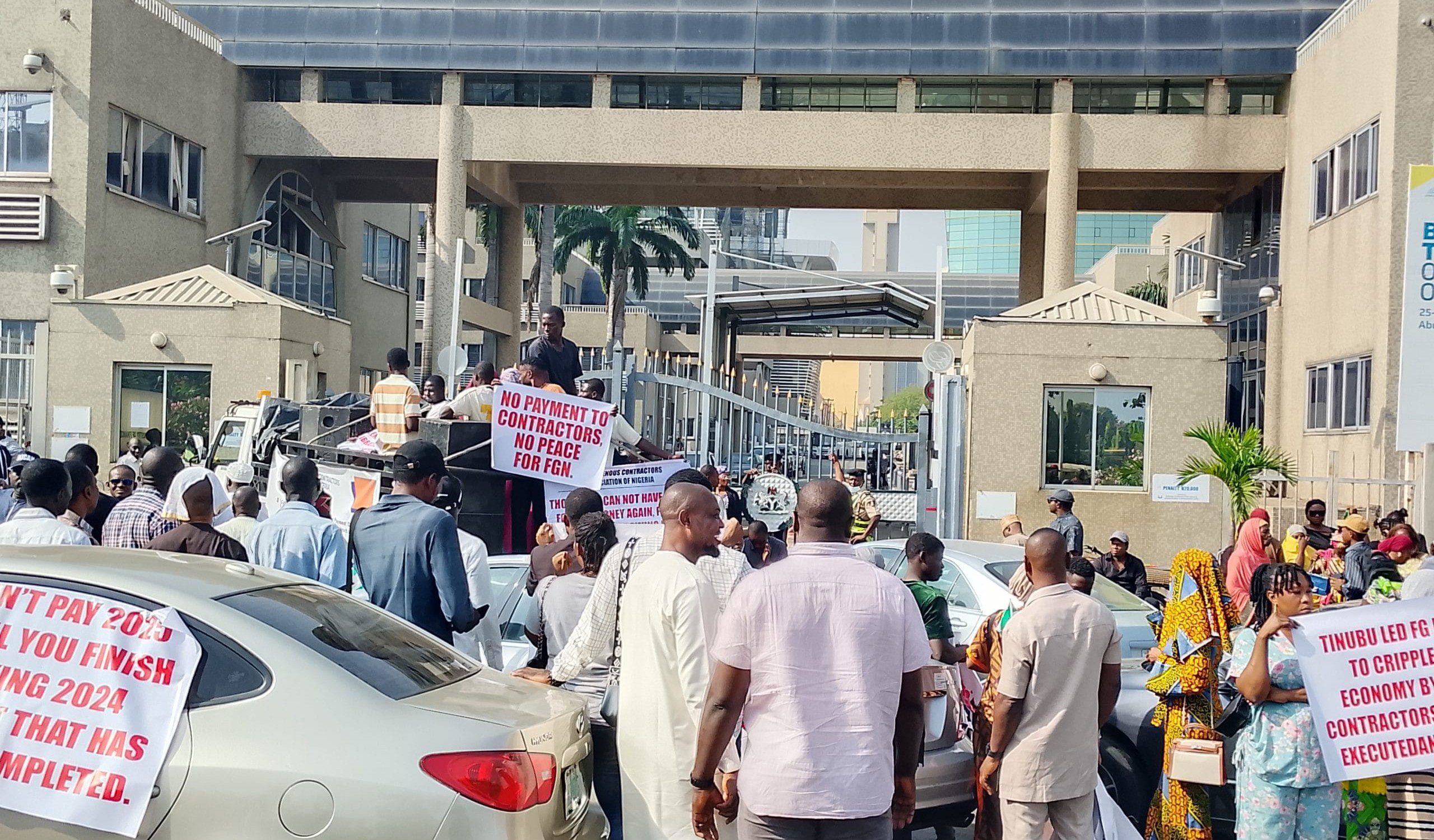
The crisis over the Federal Government’s massive debt to indigenous contractors escalated dramatically today, with hundreds of aggrieved local firms under the aegis of the All Indigenous Contractors Association of Nigeria (AICAN) launching a fresh, aggressive protest that barricaded the entrances to the Ministry of Finance headquarters in Abuja.
The contractors are fiercely demanding the immediate payment of over N500 billion for projects certified and completed, accusing the government of repeatedly reneging on promises and attempting to shunt their verified debts into the next fiscal year.
The protest is a resumption of agitation that saw the contractors briefly shut down the National Assembly complex last month. The core of the current anger is the alleged failure of the Federal Ministry of Finance to release cash backing despite earlier agreements and the issuance of payment warrants.
Protesters, who held placards reading, “Banks no longer have confidence in sponsoring government projects” and “You are killing small businesses, pay what you owe,” completely disrupted access to the Ministry, stranding staff and visitors.
AICAN National Secretary, Babatunde Seun-Oyeniyi, stated that repeated assurances from government officials, including the Minister of Finance and Coordinating Minister of the Economy, Mr. Wale Edun, had come to nothing.
Oyeniyi alleged that the Ministry’s delay tactics are a deliberate attempt to “shift us to 2026,” thereby transforming the current verified liabilities into an old debt backlog. He insisted that the association would not leave the premises until a tangible commitment, backed by cash, is made.
Contractors claim that officials initially promised to pay a first installment of N150 billion to local contractors but have failed to release the funds, despite warrants being sighted.
The outstanding N500 billion debt, much of which is for projects executed under the 2024 capital budget, is having a crippling effect on Nigeria’s critical infrastructure sector.
Contractors claim to be facing insolvency, massive loan interest accrual, and threats from lending institutions, having used borrowed funds to finance federal projects in good faith.
The resulting cash crunch has forced many indigenous firms to halt operations and lay off thousands of workers, directly contradicting the administration’s goal of job creation.
Contractors argue that the government prioritizes payments to foreign contractors working on large projects (like the Lagos-Calabar Coastal Road) while neglecting indigenous firms who completed smaller, but equally vital, capital projects more than a year ago.
The protest at the Finance Ministry is more than a labor dispute; it represents a major test of the current administration’s commitment to fiscal accountability and supporting local content.
While the government has frequently highlighted improvements in revenue generation since the removal of the fuel subsidy, the persistent failure to pay verified debts raises critical questions about, whether the available funds are being efficiently managed and prioritized to clear essential domestic liabilities.
The protest confirms a breakdown in the process of budget implementation, where funds meant for the capital budget are seemingly being held up at the point of disbursement (cash backing).
The situation demands a swift and public intervention from the Executive arm to honor the nation’s financial obligations and prevent the collapse of indigenous firms that are central to national infrastructure development.