
















































































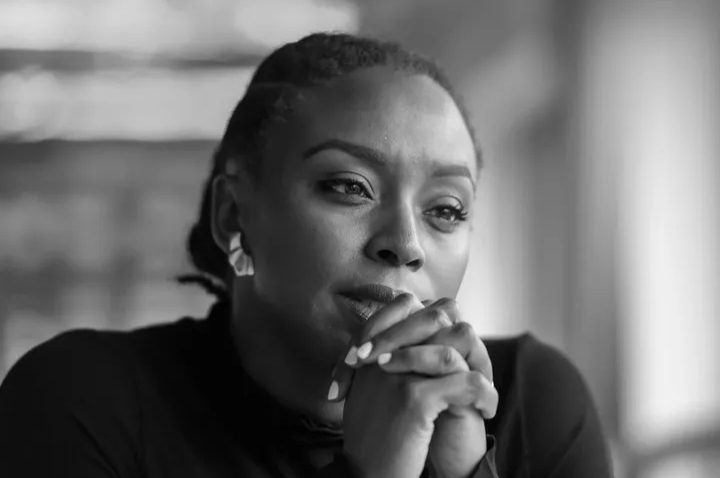
In a deeply tragic development, the world-renowned Nigerian author Chimamanda Ngozi Adichie is reportedly mourning the passing of her son. The news, which began circulating today, Thursday, 8 January 2026, has sparked an outpouring of grief and condolences from the global literary community, political leaders, and fans alike.
While the family has maintained a strictly private stance as they navigate this profound loss, close associates have confirmed the tragedy, requesting that the public respect the privacy of the author and her husband, Dr. Ivara Esege.
Adichie, the celebrated author of Half of a Yellow Sun and Americanah, has always been famously protective of her family life.
Adichie and Dr. Esege, a Maryland-based physician, are parents to a daughter born in 2016. The birth of their son had been kept largely out of the media spotlight, consistent with Adichie’s desire to shield her children from the intensities of her global fame.
The author’s official social media channels have remained silent following the news, and she has reportedly canceled several upcoming speaking engagements scheduled for the first quarter of 2026.
As news of the loss spread, prominent figures have expressed their sympathies.
Fellow authors and members of the PEN America community have shared messages of support, describing the loss as “unimaginable” and praising Adichie’s strength during previous family trials.
Several Nigerian governors and international diplomats have sent official condolence messages to the Adichie family in Abba, Anambra State.
On social media platform X, the hashtag #Chimamanda has trended with readers sharing quotes from her essays on grief, specifically from her 2021 work, Notes on Grief, which she wrote following the death of her father.
“Grief is a cruel kind of education. You learn how ungentle mourning can be, how full of anger. You learn how glib condolences can feel.” — Chimamanda Ngozi Adichie, ‘Notes on Grief’.
This tragedy comes after a series of personal losses for the author in recent years, including the passing of her father, Professor James Adichie, in 2020, and her mother, Grace Ifeoma Adichie, in 2021. Throughout these challenges, Adichie has been a vocal advocate for the “permission to mourn” and has used her platform to explore the complexities of Nigerian family structures and the weight of ancestral loss.
Representatives for the author have not released a formal statement regarding the cause of death or funeral arrangements. They have reiterated the family’s request for “space and prayers” during this difficult time.