











































































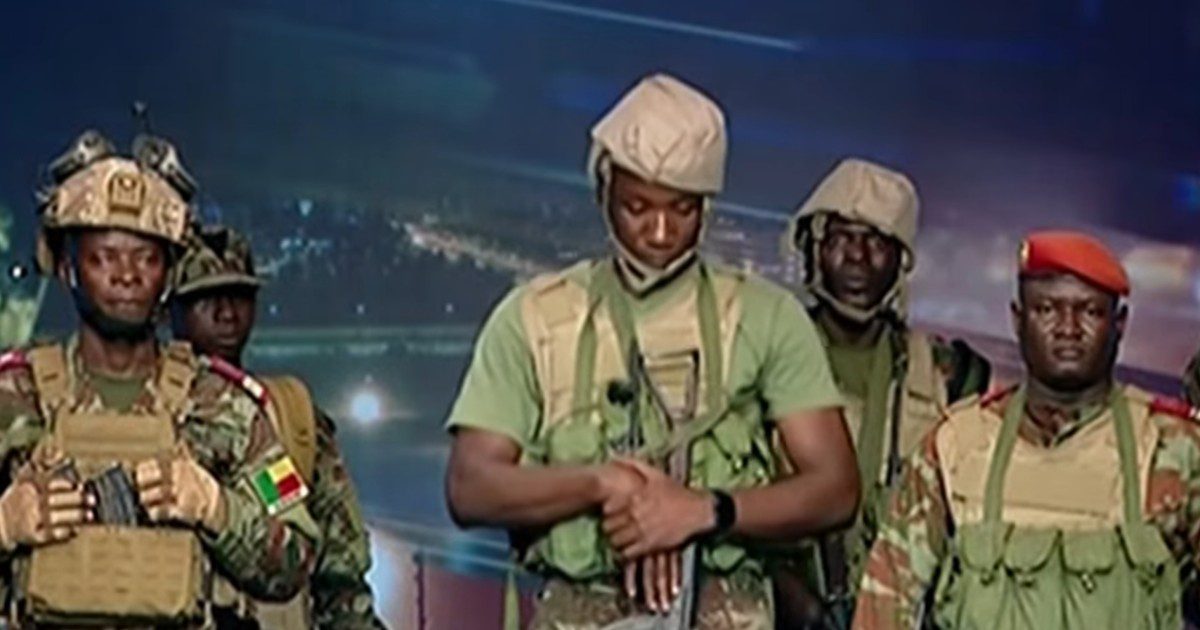
An attempted military coup in the Republic of Benin was foiled by forces loyal to the government earlier today, Sunday, December 7, 2025, according to official statements from the country’s Interior Minister.
The attempt, which involved a small group of soldiers who seized the state broadcaster and announced the overthrow of President Patrice Talon and the closure of borders, has been described by government officials as a short-lived “mutiny.”
Interior Minister Alassane Seidou confirmed in a televised statement that a “small group of soldiers launched a mutiny to destabilize the state.” He stated that the Beninese Armed Forces remained committed to the republic and their swift retaliation allowed them to “thwart the manoeuvre” and regain control.
Reports from government sources confirm that President Patrice Talon is safe and under high-level security protection, though he has not yet made a public appearance.
Military and security sources are reporting that approximately a dozen soldiers have been arrested in connection with the failed attempt.
Analysts suggest the situation has devolved into a critical “information war,” with the government rapidly restoring media signals and dismissing the coup plotters, who called themselves the “Military Committee for Refoundation” (CMR), as having no real influence.
While the mutineers announced the closure of all land and sea borders, it is unclear if this order was effectively implemented or has since been reversed by loyalist forces.
The attempted coup in Benin, a nation previously seen as a stable, if flawed, democracy, is the latest alarming sign in a deepening crisis of governance and security across the West and Central African regions.
This incident follows a successful military takeover in Guinea-Bissau last month and marks the ninth coup or attempted coup in the broader region since 2020.
Experts have also pointed to a dangerous convergence of factors creating a “coup trap” in the Sahel and coastal West Africa. –
In Benin, President Talon has been criticized for increasing authoritarianism, including the jailing of opponents and electoral reforms that significantly restrict opposition participation. This trend often removes democratic avenues for change, making military intervention an attractive option for disgruntled factions.
Most of the successful coups (Mali, Burkina Faso, Niger) have been justified by the military’s perceived failure of civilian governments to contain escalating jihadist and terrorist violence. The presence of active militant groups creates a pretext for the military to seize power under the guise of restoring order.
Widespread corruption, poverty, and leadership failure create popular dissatisfaction, leading to public support for military takeovers despite the historic poor performance of military regimes.
The African Union (AU) and the Economic Community of West African States (ECOWAS) were quick to issue strong condemnations.
The regional bloc condemned the move in the strongest terms as an “unconstitutional subversion of the will of the people” and expressed full support for President Talon’s constitutional government.
The frequent coups have severely stretched the diplomatic and sanctioning capacity of both ECOWAS and the AU, raising questions about the effectiveness of their established anti-coup protocols.
The international community is keenly watching Benin, which neighbors Africa’s largest economy, Nigeria, whose President has been firm in opposing military takeovers in the region.