












































































A man once regarded as a devoted educator and benefactor in central Morocco is now at the center of a sweeping criminal investigation in France, accused of sexually abusing dozens of boys across several countries over more than five decades.
For years in the town of Khenifra, Jacques Leveugle was known simply as the soft-spoken French expatriate who swept neighborhood streets at dawn, offered free language lessons and organized outings for local children. Fluent in Arabic, Moroccan dialect and Tachelhit, a language spoken by the region’s Berber communities, he was widely seen as a man who had deeply integrated into local life.
But French prosecutors last week revealed a starkly different picture.
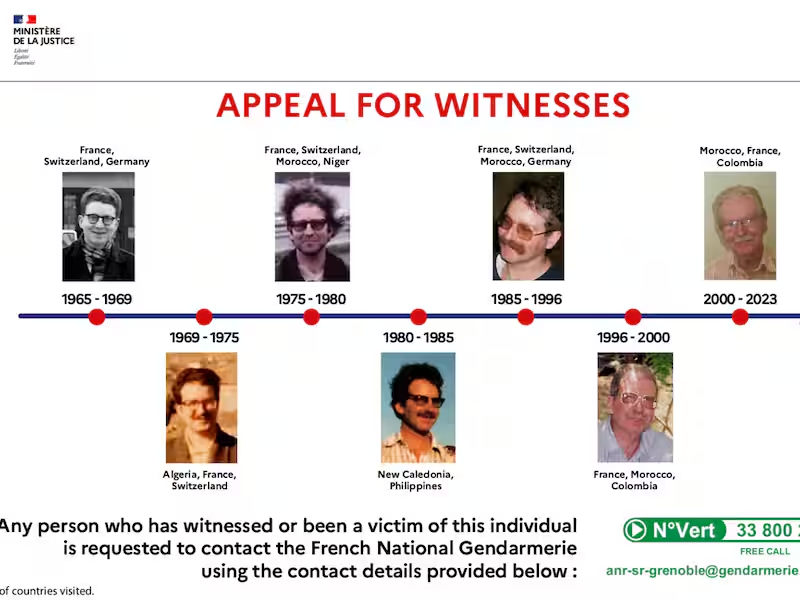
The 79-year-old is currently in custody in France and under formal investigation for the alleged rape and sexual assault of 89 boys aged between 13 and 17. Authorities say the alleged abuse spanned multiple countries and dates back to at least the 1970s. Prosecutors also disclosed that Leveugle admitted to smothering his terminally ill mother and later killing his 92-year-old aunt, claims that have intensified the gravity of the case.
The allegations surfaced after a relative reportedly discovered a 15-volume digital memoir on a USB drive and handed it to French authorities. Investigators say the material contained detailed accounts that led to the identification of dozens of alleged victims.
Grenoble Prosecutor Etienne Manteaux told reporters that many of the suspected crimes occurred in North Africa, including Morocco, where Leveugle lived until his arrest in 2024. He is suspected of abusing more than a dozen boys there. In neighboring Algeria, where he worked as a foreign language teacher during the 1960s and 1970s, at least two children are believed to have been victims.
French investigators have issued an international appeal for witnesses and are expected to travel to Morocco as part of the ongoing inquiry. Moroccan authorities have not publicly commented on whether a parallel investigation has been opened locally.
In Khenifra’s working-class Lassiri neighborhood, residents say the revelations have brought a wave of shock, anger and humiliation.
Leveugle lived in an unfinished, single-story house surrounded by fig trees along a riverbank. Children often played nearby. Neighbors, many of whom spoke on condition of anonymity, described him as generous and helpful, a man who funded local initiatives, provided cash assistance and occasionally helped residents secure employment or emigrate to Europe.
He organized trips for children, including visits to the scenic regional lake Agelmam Azegza, where some residents recall he encouraged boys to swim naked, a practice deeply at odds with Moroccan cultural and religious norms.
Several community members say the case has eroded trust within families and among neighbors. Some residents are reportedly considering relocating due to the stigma attached to the neighborhood.
Born in the 1940s in Annecy, France, Leveugle first arrived in Morocco in 1955, according to Moroccan officials familiar with the case. His father reportedly worked at the French Embassy, and Leveugle attended school in Rabat during the final years of the French protectorate.
He later obtained Moroccan residency and, according to justice officials, had no known criminal complaints filed against him in the country prior to his arrest. He settled in Khenifra in the early 2000s and became known for offering free tutoring sessions and spending significant time with teenage boys.
The case has reignited concerns about child protection and the underreporting of abuse in North Africa.
Najat Anwar, president of the Moroccan child protection group Don’t Touch My Child, described the allegations as exceptionally serious and said the organization stands ready to join the case as a civil party if Moroccan victims come forward.
Former students in Algeria have also expressed disbelief. Some described Leveugle as a dedicated and professional teacher who never raised suspicion during his years in the classroom.
Child protection advocates say the case fits a broader global pattern in which perpetrators cultivate positions of trust through education, charity or cultural engagement before targeting vulnerable youths.
French authorities believe additional victims may yet be identified as investigations continue across borders.
SOURCE: Associated Press