













































































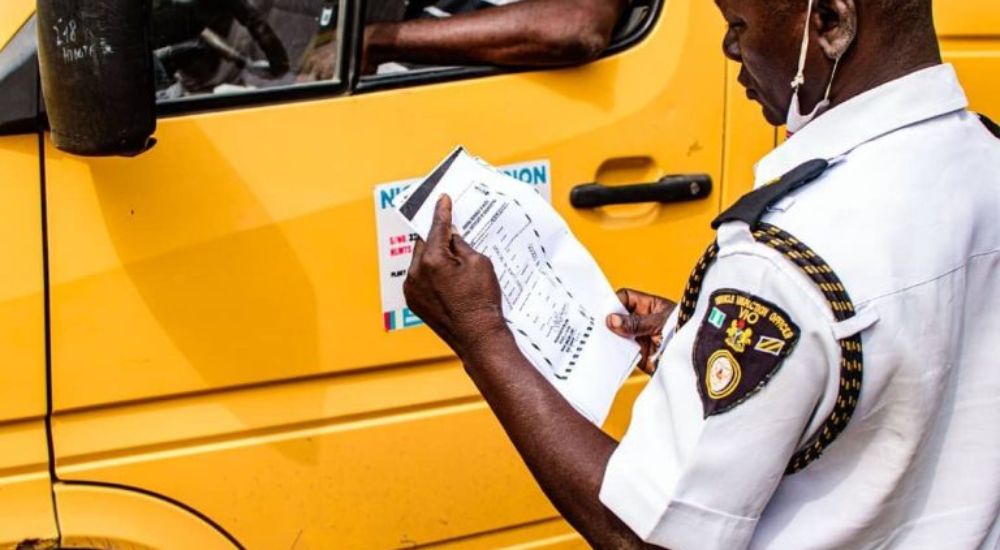
The Court of Appeal in Abuja today, Thursday, December 4, 2025, delivered a landmark judgment that significantly curtails the enforcement powers of the Directorate of Road Traffic Services (DRTS), popularly known as the Vehicle Inspection Officers (VIO).
In a unanimous decision, the three-member appellate panel upheld an earlier Federal High Court ruling, effectively affirming that the VIO has no legal authority to confiscate vehicles, stop motorists, or impose fines on the spot for traffic infractions within the Federal Capital Territory (FCT).
The judgment dismisses the appeal filed by the VIO and its parent body, the DRTS, against the October 2024 ruling of the Federal High Court.
Justice Oyejoju Oyewumi, who delivered the lead judgment, held that the appeal lacked merit and found no basis to overturn the lower court’s decision.
The court based its decision on a fundamental rights enforcement suit (FHC/ABJ/CS/1695/2023) filed by a public interest lawyer, Abubakar Marshal. The court agreed that the VIO’s actions of seizing vehicles and imposing fines violate a motorist’s constitutional rights, including the right to freedom of movement, the presumption of innocence, and the right to own property without due process.
The judgment reasserted the principle that only a court of competent jurisdiction has the constitutional power to adjudicate traffic offenses, impose sanctions, or levy fines, not an administrative agency.
This ruling has profound implications for traffic law enforcement across the FCT and sets a critical precedent for other states.
The VIO in the FCT is now legally restrained by a higher court from the physical impoundment of vehicles and the on-the-spot imposition of fines.
The VIO had also previously appealed the initial judgment, attempting to introduce an e-ticketing system in response to the initial Federal High Court ruling. This new Appeal Court judgment strikes a severe blow to their traditional enforcement methods.
While the judgment is legally binding within the FCT’s jurisdiction, it adds to a growing line of judicial decisions (including in Delta and Enugu states) that have consistently curtailed the overreach of VIOs and similar traffic agencies, forcing states to review their traffic enforcement laws to align with constitutional provisions.
The focus will now shift to how the FCT Minister and the Directorate of Road Traffic Services will comply with this ruling and whether they will attempt a final appeal to the Supreme Court.