
















































































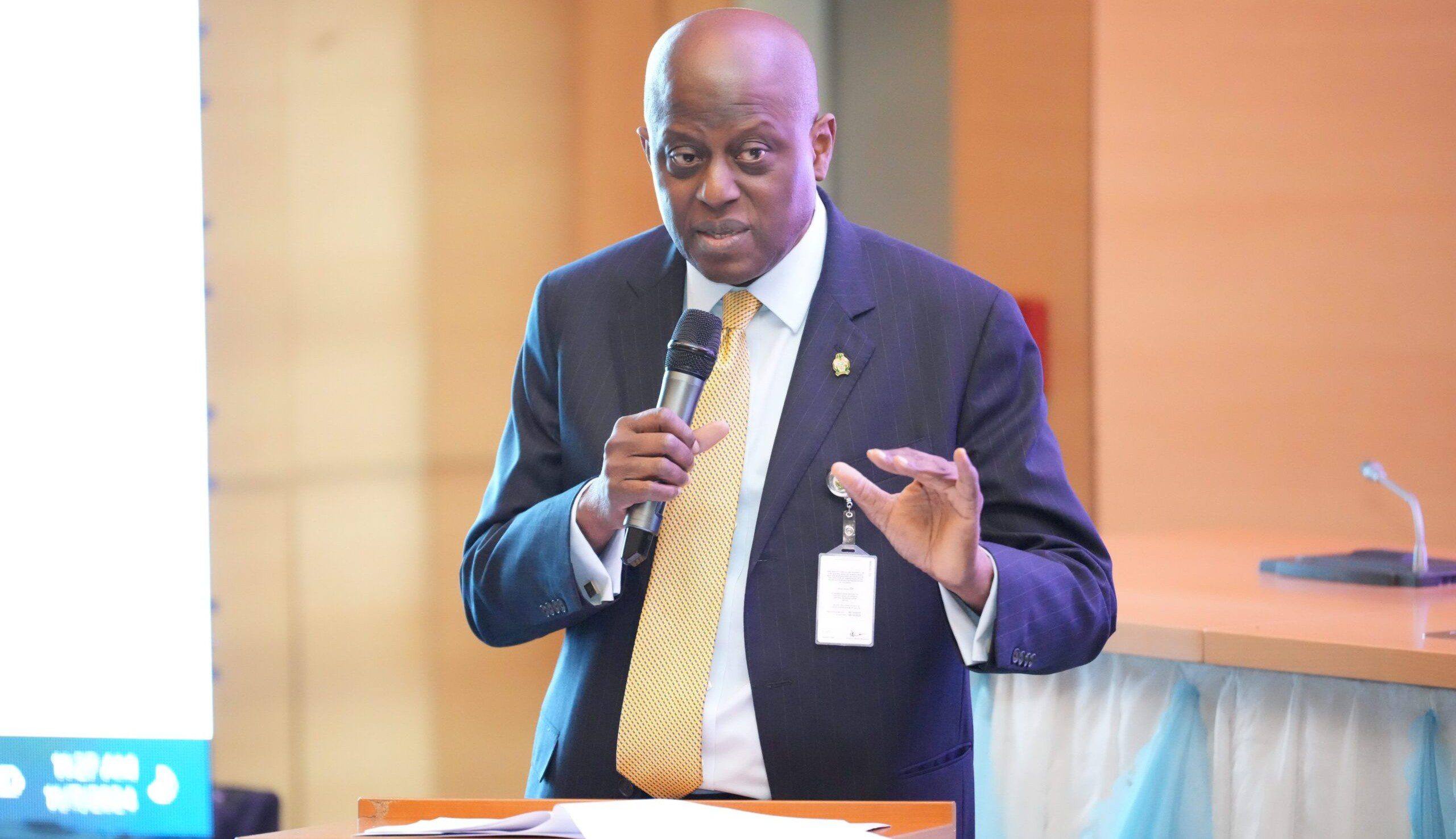
The Governor of the Central Bank of Nigeria (CBN), Olayemi Cardoso, has declared that the agriculture sector can no longer be subjected to a “business-as-usual” financing approach, insisting that it must receive its “rightful place in our financial system and national priorities.”
Cardoso made the emphatic statement on Tuesday in Abuja during the inauguration of the newly constituted Board of the Agricultural Credit Guarantee Scheme Fund (ACGSF), signalling the apex bank’s commitment to significantly increase bank lending to the sector.
Governor Cardoso highlighted the chronic imbalance between the agricultural sector’s importance to the national economy and its access to formal credit:
Agriculture currently contributes over one-fifth of Nigeria’s Gross Domestic Product (GDP) and employs nearly two-thirds of the working population. Despite its massive contribution, the sector receives less than 5 per cent of total formal bank lending.
Cardoso warned that this chronic underfunding has stifled productivity and expansion for millions of Nigerian farmers, constraining the sector’s immense potential for food security and poverty reduction.
“It is a reassessment of norms: we will no longer accept business-as-usual. Instead, we embrace a future where agriculture is accorded its rightful place.” — Olayemi Cardoso, CBN Governor
The CBN’s solution centers on leveraging and strengthening the ACGSF, which was established in 1977 to encourage banks to lend to the sector. The ACGSF guarantees up to 75 per cent of the value of agricultural loans, thereby mitigating the risk banks often associate with lending to farmers.
Cardoso also noted that the scheme had been strengthened following a 2019 amendment that expanded its share capital from ₦3 billion to ₦50 billion, broadening its scope to meet modern agricultural needs like value-chain growth, technology adoption, and climate risk management.
The new ACGSF board is composed not only of government officials but also of farmers’ representatives, a strategic move designed to ensure collaboration between policymakers, financiers, and the farming community.
Cardoso urged the new board to prioritize financial inclusion, particularly for smallholder farmers, women, and youth, through partnerships with microfinance institutions and the deployment of digital credit systems.