











































































The pan-Yoruba socio-political group, Afenifere, has issued a scathing review of President Bola Ahmed Tinubu’s administration at the midpoint of his first term, declaring that the much-publicized promise of “renewed hope” has unraveled into what it describes as a deepening national crisis.
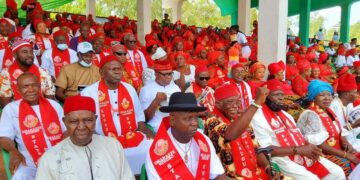
In a strongly worded statement released Sunday, Afenifere accused the Tinubu-led government of presiding over worsening economic hardship, insecurity, and political exclusion particularly in the South-West region, from which Tinubu hails.
Speaking through its leader, Pa Ayo Adebanjo, the group said the current administration’s performance has been disappointing and divisive. “The campaign promise of renewed hope has become a nightmare. Nigerians are hungrier, angrier, and less secure than they were two years ago,” Adebanjo said.
He further criticized the federal government’s economic reforms, including the removal of fuel subsidies and the floating of the naira, arguing that these policies were implemented without adequate social cushioning, leaving millions of Nigerians in deeper poverty.
Nigeria’s inflation rate remains high, the naira continues to struggle in both official and parallel markets, and recent minimum wage debates have exposed tensions between federal policy and the everyday struggles of workers.
Afenifere pointed to these economic realities as proof that the government is out of touch with the suffering of ordinary citizens. “How do you ask people to tighten their belts when the political elite continues to live lavishly?” the group asked.
Beyond the economy, the group also condemned what it called “the continued failure of government to protect lives and property.” Afenifere cited persistent killings in Benue, Plateau, Zamfara, and even parts of Lagos and Ogun, blaming the administration for what it called “a leadership vacuum in internal security.”
The group reiterated its longstanding call for the restructuring of the federation, advocating a return to true federalism, state policing, and devolution of power to curb systemic inefficiencies.
As of press time, the Presidency had not issued a formal reply to Afenifere’s criticisms. However, insiders within the All Progressives Congress (APC) dismissed the group’s statement as politically motivated, pointing out internal divisions within Afenifere itself.
Some APC loyalists claim that the group’s leadership has long been critical of Tinubu, even during his campaign, and that its position reflects ideological rather than objective judgment.
Notably, a faction of Afenifere led by Pa Reuben Fasoranti had endorsed Tinubu during the 2023 elections, creating a public rift within the group. This has raised questions about whose views truly represent the Yoruba socio-political position. However, the Adebanjo-led faction remains highly vocal and influential, particularly on issues of governance and constitutional reform.
Afenifere’s public rebuke is not just a political critique, it reflects growing frustration among a segment of Tinubu’s traditional support base. As economic and security challenges persist, midterm discontent may continue to grow louder, especially from voices that helped carry the administration to power.