













































































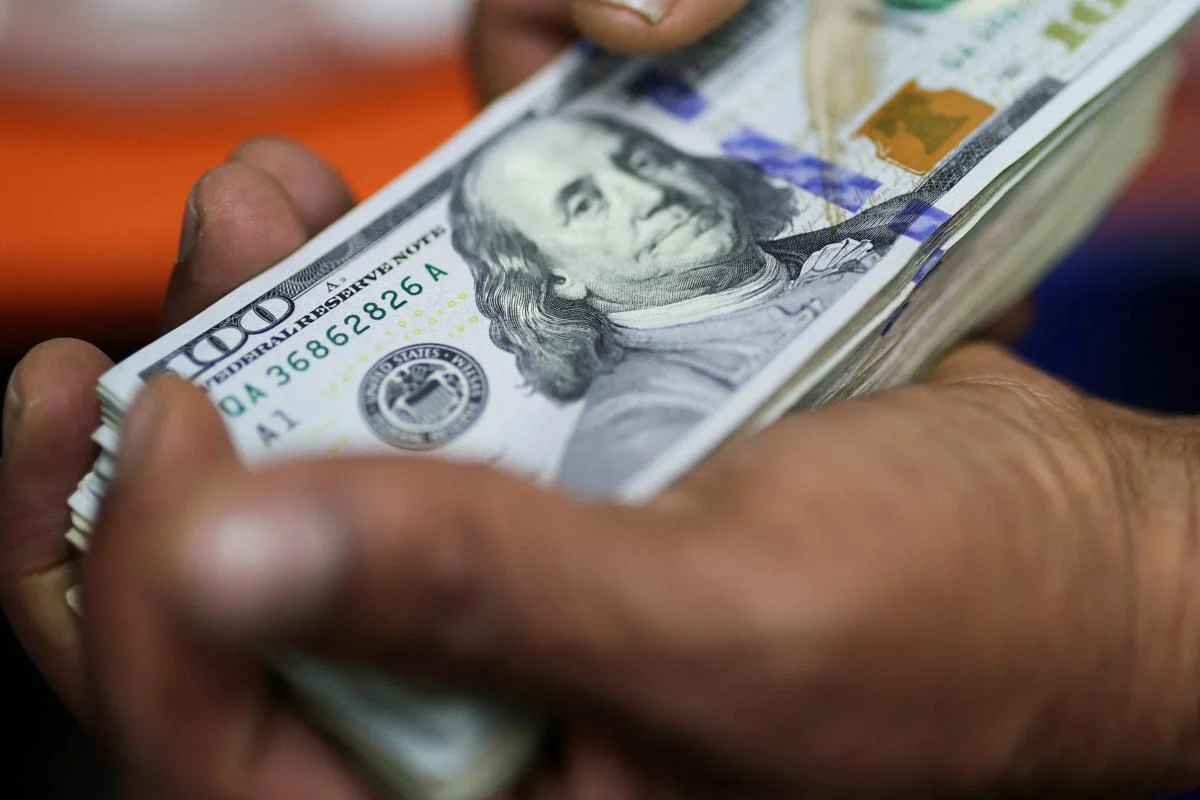
The U.S. dollar weakened sharply on Wednesday after a surprise ceasefire agreement between the United States and Iran eased geopolitical tensions and revived investor appetite for risk.
The greenback fell to its lowest level in a month against a basket of major currencies, as traders moved away from safe-haven assets and back into equities and higher-yielding currencies.
The euro climbed 0.88% to $1.1696, its strongest level since early March, while the British pound rose 1.2% to $1.345. Meanwhile, the dollar dropped 0.84% against the Japanese yen to 158.31.
The shift in currency markets followed a dramatic policy turn from Donald Trump, who had earlier issued a stark warning of large-scale attacks on Iran’s civilian infrastructure if demands were not met. His statement drew widespread international concern before a last-minute agreement was reached.
The ceasefire, announced less than two hours before a critical deadline tied to the Strait of Hormuz, quickly changed market sentiment. Investors, who had been bracing for escalation, responded by piling back into stocks and government bonds.
Analysts say the dollar’s decline reflects a reversal of its recent strength during the conflict. As tensions rose in previous weeks, the currency benefited from safe-haven demand and the United States’ position as a net energy exporter, shielding it from the worst effects of rising oil prices.
“The moves can be temporary, but right now the optimism justifies a pullback in the dollar,” said Juan Perez, senior director of trading at Monex USA.
The agreement reportedly hinges on Iran pausing its blockade of oil and gas shipments through the Strait of Hormuz, a vital route that carries roughly one-fifth of global oil supply. Any disruption there has immediate consequences for global energy markets.
Despite the dollar index slipping for a third straight session to 98.526, its lowest level since February, it remains above pre-conflict levels. That suggests investors are still cautious about fully unwinding defensive positions.
Jeremy Stretch, head of G10 FX strategy at CIBC Capital Markets, warned against reading too much into the rally.
“There are still significant uncertainties. Markets are reacting to relief, but not necessarily resolution,” he said.
Energy prices have been a key driver of recent market shifts. Earlier fears of supply disruption had pushed oil higher and led investors to expect tighter monetary policy to control inflation. However, Wednesday’s drop in oil prices altered that outlook.
Traders are now pricing in roughly a 50% chance that the Federal Reserve could cut interest rates by the end of the year, a notable reversal from earlier expectations.
Elsewhere, the New Zealand dollar surged 1.83% to $0.5837 after the Reserve Bank of New Zealand held its policy rate steady at 2.25% for a second consecutive meeting. The central bank signaled it is prepared to act if inflation pressures worsen amid lingering global uncertainty.
In digital assets, Bitcoin rose 3.12% to $71,466.71, extending gains as improved risk sentiment spilled over into crypto markets.
While the ceasefire has brought temporary calm, analysts say markets remain sensitive to developments, with investors closely watching whether the agreement holds and how it shapes the broader economic outlook.