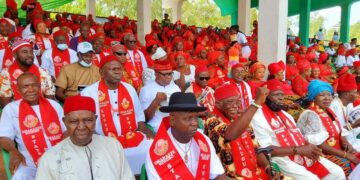






















































An Igbo advocacy group, the Ndigbo Worldwide Union, has endorsed calls by some U.S. lawmakers urging Nigeria to remove Sharia and blasphemy provisions from its Constitution, arguing that no modern state can function effectively with parallel legal systems.
In a statement jointly signed by its President, Benjamin I. Nwankwo, and Secretary, Charles Edemuzo, the group said continued resistance to such proposals exposes what it described as “official hypocrisy” and contributes to recurring violence linked to Sharia enforcement in parts of northern Nigeria.
The group specifically commended U.S. Congressman Riley Moore for raising concerns over Sharia’s constitutional status in Nigeria, describing the proposal as “long overdue.”
“The time for ambiguity is over,” the statement read. “A country cannot claim to operate a common-law system while simultaneously running a full religious criminal code. Two legal systems cannot coexist in a serious nation.”
Nigeria operates a plural legal framework in which statutory law, customary law and Sharia law function side by side. Sharia is practiced primarily in 12 northern states, particularly in matters involving Muslims who submit to its jurisdiction.
The Ndigbo Worldwide Union argued that constitutional recognition of Sharia, combined with Nigeria’s membership in the Organization of Islamic Cooperation (OIC), has created what it termed a structural contradiction that threatens national unity.
The group challenged northern political leaders to adopt what it described as a uniform and egalitarian common-law framework for all citizens or pursue an alternative political arrangement.
“Pretending otherwise is denial,” the statement said, adding that the country faces a critical juncture over the issue.
Citing previous high-profile cases, including the killing of Deborah Samuel and the continued captivity of Leah Sharibu, the group said such incidents highlight the dangers of religious extremism and legal inequality.
It warned that failure to address the constitutional debate could deepen existing fault lines and push the country toward instability.
The group called on the National Assembly to take decisive action, framing the debate as a defining moment for Nigeria’s future.
“Remove Sharia from the Constitution and preserve peace or ignore the warning signs and preside over a national rupture. There is no middle ground,” the statement said.
The debate over Sharia’s role in Nigeria’s constitutional framework remains a sensitive and deeply divisive issue, reflecting broader tensions around religion, governance and national identity in Africa’s most populous country.