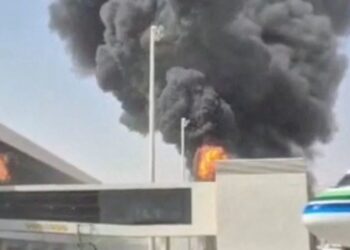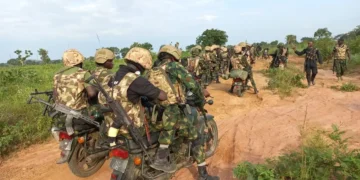













































































Nigerian forces have successfully repelled simultaneous attacks by Islamist militants on two military bases in Borno State, the Defence Headquarters said on Monday, in some of the fiercest clashes recorded in the northeast this year.
The insurgency-hit state, the epicentre of Nigeria’s 17-year battle against extremist groups, has seen renewed offensives by fighters linked to Islamic State West Africa Province and related Islamist factions, targeting both military positions and civilians.
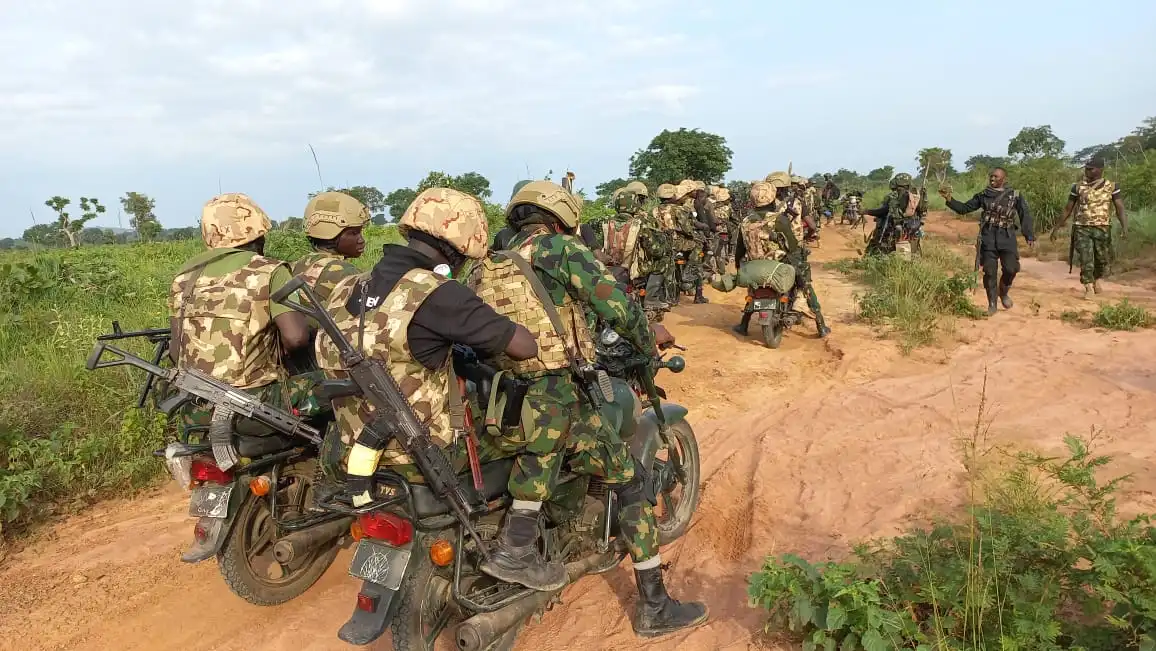
In a statement, army officials said troops faced coordinated assaults on two strategic locations but held their ground, forcing the attackers to withdraw. The clashes were described as among the most intense engagements in the region so far this year.
While the military has yet to disclose the exact number of casualties, it acknowledged that soldiers were killed in the confrontations and confirmed ongoing follow-up operations.
Additional local reporting indicates that in related attacks, militants opened fire in several southern Borno communities, including areas such as Gwoza, Biu and Hawul, where at least four soldiers were killed and others wounded in multiple coordinated assaults on military bases.
Borno has long been a focal point of Nigeria’s fight against insurgency. Extremist groups such as ISWAP, an offshoot of Boko Haram, continue to mount frequent attacks despite sustained military operations. These armed groups have been responsible for thousands of deaths and the displacement of millions in the northeast.
The clashes come amid broader efforts by the Nigerian military and security forces to degrade militant capabilities and restore stability. In recent months, joint counter-insurgency operations, including air strikes and coordinated ground missions under Operation HADIN KAI, have been launched to disrupt militant networks and protect both military personnel and local populations.
Despite tactical setbacks inflicted on extremist fighters, analysts say insurgents remain resilient, exploiting porous terrain such as the Sambisa Forest to stage attacks. The Nigerian military has repeatedly emphasized the need for sustained pressure, improved intelligence, and inter-agency cooperation to break the cycle of violence in the northeast.
As troops continue security operations across volatile regions, officials stress that such resilience from militants underscores the ongoing challenge of uprooting deeply entrenched insurgent networks. Investments in intelligence sharing, community defence initiatives and coordination with international partners remain key components of the broader strategy to stabilize affected areas.