
















































































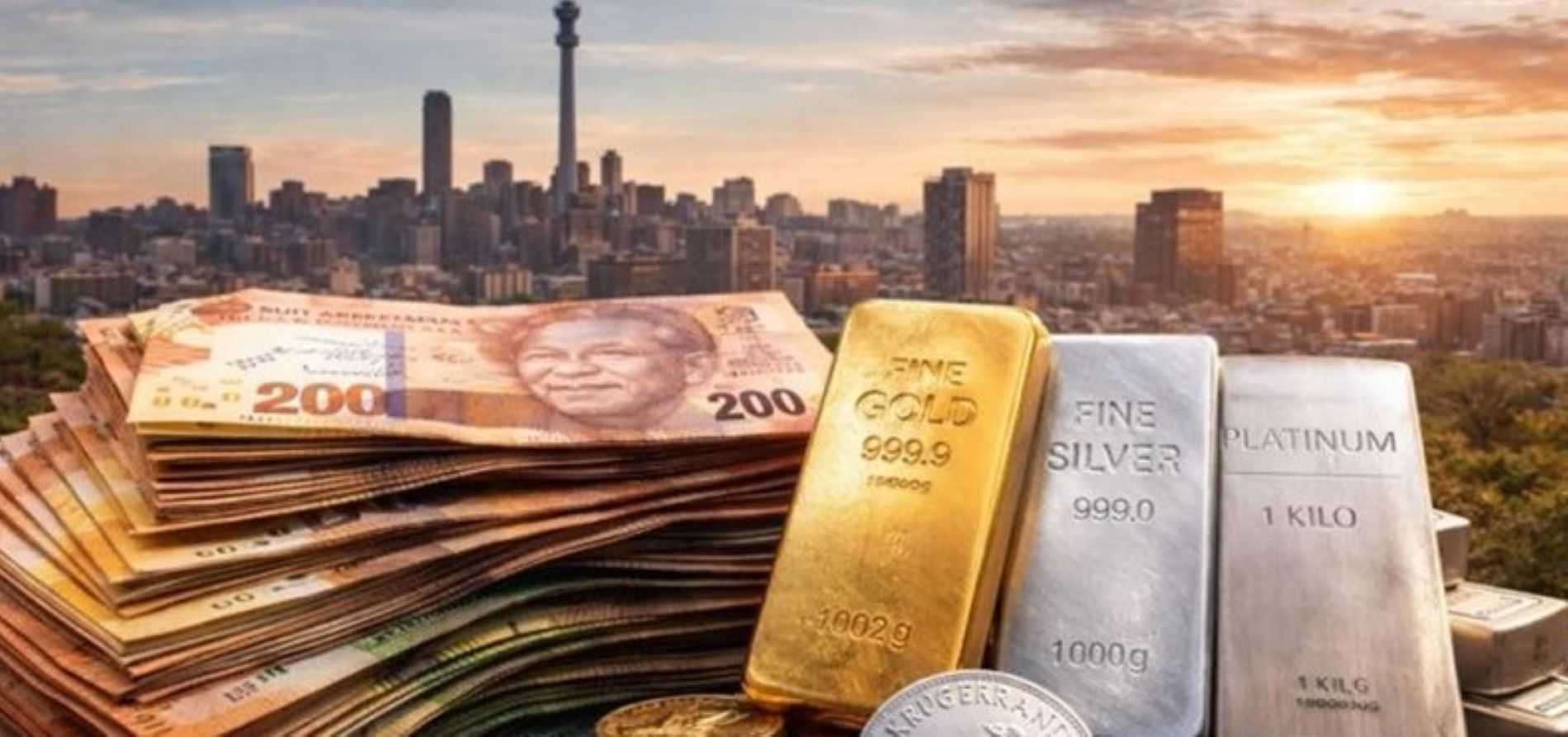
The South African rand weakened on Tuesday, pressured by a pullback in global precious metal prices and renewed investor caution ahead of key economic data, underscoring the currency’s sensitivity to commodity markets and risk sentiment.
The rand was trading around R15.95 to the U.S. dollar, about 0.3% weaker on the day, as bullion prices eased from recent peaks and traders weighed uncertainty over U.S. interest rates and financial conditions. Precious metals such as gold and platinum, key South African exports, are major drivers of foreign exchange flows for the economy.
Gold fell roughly 0.8%, though it remained comfortably above the $5,000-per-ounce mark where it has traded in recent sessions, while platinum retreated by more than 2%, according to market data.
The retreat in metals comes as financial markets brace for major U.S. employment and inflation reports later this week that could influence the Federal Reserve’s policy direction, a driver of global risk appetite and safe-haven demand. Investors have recently favoured hard assets such as gold during periods of uncertainty, but the easing in prices this week has reduced some of the support for commodity-linked currencies like the rand.
South Africa’s role as a major metals exporter, particularly of gold and platinum group metals (PGMs), means the rand often moves in tandem with shifts in those markets. Changes in precious metal prices affect export earnings and capital flows, influencing currency demand.
Alongside the currency’s weakness, South African equity markets also lost ground. The Johannesburg Stock Exchange Top-40 Index dipped roughly 0.3%, reflecting softer risk sentiment among investors. Meanwhile, yields on longer-dated government bonds edged higher, with the benchmark 2035 bond rising modestly, reinforcing a slightly less favourable outlook for local assets.
Traders are also keenly watching domestic developments, including mining and manufacturing data due later this week, which could offer fresh clues about the health of Africa’s most industrialized economy and provide direction for the rand.
Market analysts note that the rand’s swings in recent weeks have largely been driven by external factors, from shifts in commodity demand to global risk flows, making the currency particularly reactive to changes in investor sentiment and key international data releases.
As precious metal prices fluctuate with global financial conditions, South Africa’s currency is expected to remain sensitive to both commodity markets and broader risk trends in the weeks ahead.