







































































Fighting has intensified in a remote corner of eastern Democratic Republic of Congo, straining U.S.-led diplomatic efforts to curb violence in a region long plagued by armed groups and weak state control.
At the general hospital in Fizi, a town hemmed in by steep highlands in South Kivu province, nurses rushed a wounded soldier into surgery after he was brought in slumped on the back of a motorbike, one of dozens of casualties from recent clashes, medical staff said.
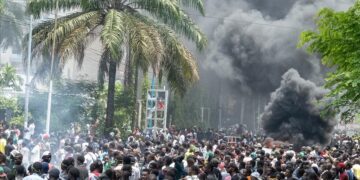
The latest violence has pitted Congolese government forces against suspected Islamist-linked and local militia fighters operating along the shores of Lake Tanganyika, an area that has seen a resurgence of attacks in recent weeks. Local officials said fighting erupted after militants ambushed army patrols and overran several villages, forcing thousands of residents to flee.
The clashes come as Washington intensifies mediation efforts aimed at stabilizing eastern Congo and easing tensions between Kinshasa and neighbouring Rwanda, which Congo accuses of backing armed groups — a charge Kigali denies.
U.S. officials have sought to broker confidence-building measures and regional security coordination, but persistent fighting on the ground highlights the limits of diplomacy in areas where armed groups operate with little resistance.
“We are seeing renewed boldness from these groups,” said a local security official in South Kivu, who requested anonymity because he was not authorized to speak publicly. “They are exploiting gaps in security and the difficult terrain.”
Hospitals in Fizi and neighbouring communities are struggling to cope with the influx of wounded civilians and soldiers, medical workers said, while access for humanitarian agencies remains limited due to insecurity.
Eastern Congo has been scarred by decades of conflict involving dozens of militias, driven by ethnic tensions, competition over land and mineral resources, and spillovers from regional wars. Despite the presence of United Nations peacekeepers, attacks on civilians remain frequent.
U.S. officials say their engagement is aimed at addressing the root causes of the conflict, including governance failures and regional mistrust, but acknowledge that progress will take time.
For residents of Fizi, the immediate concern is survival. “People are hiding in the hills,” said a community leader. “They don’t know when it will be safe to return.”