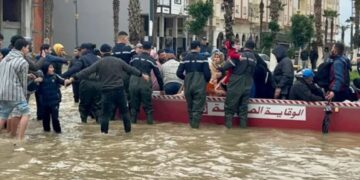


















































































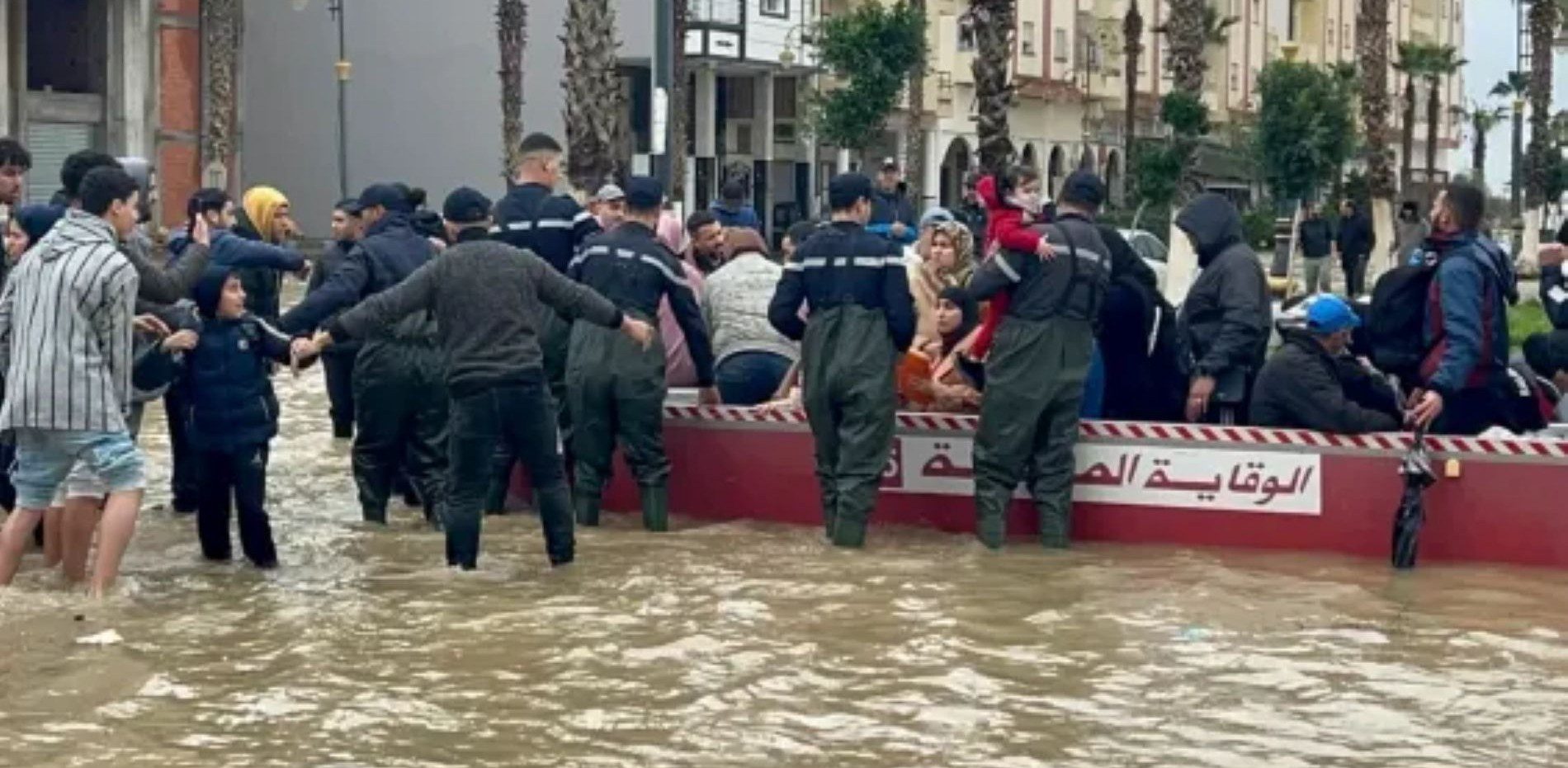
Moroccan authorities have urged residents in flood-prone areas of the country’s northwestern plains to evacuate immediately, as heavy rainfall, swollen rivers and emergency water releases from near-capacity dams sharply increase the risk of widespread flooding.
The warning, issued on Wednesday, comes as more than 108,000 people have already been evacuated from vulnerable communities, according to civil protection officials. Emergency services said the situation remains fluid, with additional evacuations likely if rainfall persists.
Weeks of intense rainfall have pushed several major rivers in northwestern Morocco to dangerously high levels, threatening low-lying towns and agricultural areas. Authorities said some dams have reached or exceeded safe capacity, forcing controlled water releases to prevent structural failure, a move that has further heightened downstream flood risks.
“The combination of heavy rain, saturated soil, and dam releases creates a serious threat,” a civil protection official said. “Residents in exposed zones should not delay evacuation.”
Meteorological services warned that further downpours are forecast, particularly across the Gharb and Loukkos plains, regions already prone to flooding due to flat terrain and extensive river networks.
Morocco’s Interior Ministry said emergency teams, including the military, police, and civil protection units, have been deployed to assist with evacuations, reinforce riverbanks, and provide temporary shelter.
Schools in some affected areas have been closed, while local authorities have converted sports halls and public buildings into emergency shelters. Medical teams are also on standby to prevent outbreaks of water-borne diseases.
“We are prioritizing the protection of lives,” a government spokesperson said. “People must cooperate with evacuation orders, even if the immediate danger is not yet visible.”
Beyond the humanitarian toll, the floods threaten significant agricultural losses, particularly in one of Morocco’s key food-producing regions. Farmers fear damage to crops, livestock, and rural infrastructure just as the growing season peaks.
Transport disruptions have already been reported, with some rural roads cut off and rail services slowed in affected corridors.
The unfolding crisis has renewed attention on extreme weather events in North Africa, where climate scientists say prolonged droughts are increasingly followed by episodes of intense rainfall, overwhelming infrastructure not designed for such volatility.
Morocco has invested heavily in dam construction to manage water scarcity, but experts warn that climate extremes are testing the limits of existing flood-control systems.
Authorities said flood alerts remain in force and urged residents to follow official updates closely. With rivers still rising and rain forecast to continue, emergency planners are preparing for the possibility of wider displacement in the coming days.
“For now, safety comes first,” the Interior Ministry said. “Property can be rebuilt. Lives cannot.”
As Morocco braces for further rain, the focus remains on evacuation, containment, and preventing the flood threat from turning into a larger humanitarian disaster.