











































































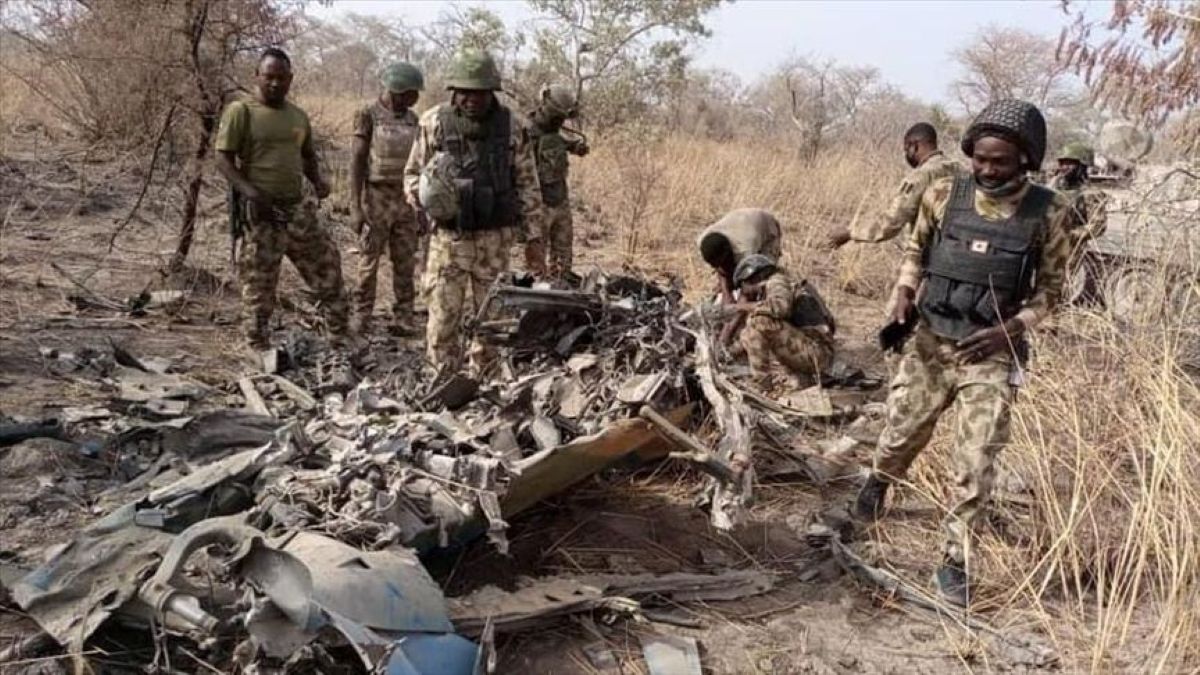
The Nigerian Army says it has killed a senior Boko Haram commander and 10 other fighters during a military operation in Borno State, dealing a fresh blow to the extremist group’s operational capacity in the northeast.
Army spokesperson Major General Edward Buba said the killings occurred during a coordinated offensive by troops of Operation Hadin Kai, following actionable intelligence on the movement of insurgents in a known Boko Haram enclave. The operation involved ground troops supported by aerial surveillance.
According to the military, the Boko Haram commander, described as a key figure responsible for coordinating attacks and logistics in the area, was neutralized during a firefight after insurgents attempted to resist advancing troops.
“Our forces engaged the terrorists in a fierce exchange, resulting in the elimination of one Boko Haram commander and 10 other fighters,” Buba said in a statement. “Several weapons, ammunition, and logistics supplies were also recovered.”
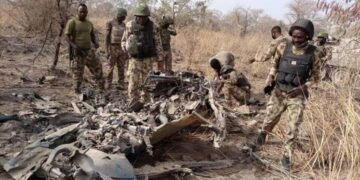
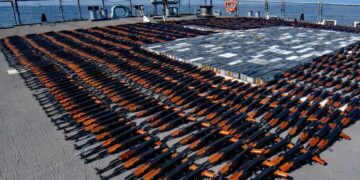
The army said items recovered at the scene included assault rifles, rocket-propelled grenade components, improvised explosive device (IED) materials, and communication equipment. The seizure, officials said, would disrupt the group’s ability to plan and execute further attacks.
Military sources noted that no casualties were recorded among government forces during the operation, though mop-up operations were still ongoing in surrounding areas to track fleeing insurgents.
The operation forms part of ongoing efforts to degrade Boko Haram and its rival faction, Islamic State West Africa Province (ISWAP), which continue to stage attacks on military targets and civilian communities despite years of sustained counterinsurgency campaigns.
Security analysts say the killing of field commanders is significant, as such figures often play critical roles in recruitment, intelligence gathering, and coordination of raids.
“Taking out commanders disrupts command-and-control structures,” said a security analyst based in Maiduguri. “But the groups have shown resilience and an ability to replace leaders quickly.”
While welcoming the reported success, analysts caution that insurgent groups remain capable of launching deadly attacks, including recent assaults on military bases and the increasing use of drones and IEDs.
The Nigerian Army said it remains committed to maintaining pressure on insurgents and urged residents to continue providing intelligence to security forces.
“We will not relent until terrorist elements are completely neutralized,” Buba said.
Borno State has been the epicentre of Nigeria’s insurgency for more than a decade, with the conflict claiming tens of thousands of lives and displacing millions. Despite military gains, authorities acknowledge that restoring lasting peace will require sustained security operations alongside reconstruction and community stabilization efforts.