




















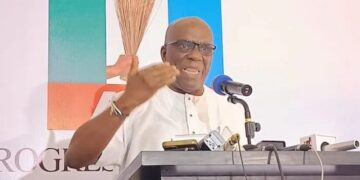









































Billionaire investor Femi Otedola has defended the decision by First Bank of Nigeria Holdings Plc to write off ₦748 billion in non-performing loans, describing the move as necessary to stabilize the bank and position it for long-term growth.
Otedola, who is the chairman of First HoldCo, addressed the controversy amid public scrutiny and concerns from analysts over the scale of the write-off, one of the largest in Nigeria’s banking history. He said the action was part of a deliberate cleanup of legacy issues that had weighed down the bank’s balance sheet for years.
“These were bad loans accumulated over a long period,” Otedola said. “You cannot move forward while carrying problems from the past. The write-off was painful but unavoidable.”
The ₦748 billion write-off relates largely to loans issued to corporate entities that became delinquent over time, some dating back more than a decade. Banking sources say many of the loans had already been provisioned for under regulatory guidelines, meaning the impact on capital was limited compared to the headline figure.
Otedola noted that the decision was taken in line with Central Bank of Nigeria (CBN) regulations and international financial reporting standards, adding that the clean-up would strengthen investor confidence and improve the bank’s ability to lend to the real economy.
“This is about transparency and discipline,” he said. “We are resetting the institution to global best practices.”
The write-off has sparked debate within financial circles, with some critics questioning how such a large volume of bad loans accumulated at one of Nigeria’s oldest and most systemically important banks. Others, however, argue that confronting the problem openly is preferable to carrying impaired assets indefinitely.
A senior banking analyst said the move, while dramatic, could mark a turning point. “It’s a signal that First Bank is serious about reform. The real test will be whether governance and risk controls improve going forward.”
First HoldCo has said it is strengthening credit risk management, tightening loan approval processes, and pursuing recoveries where possible, even after the accounting write-offs.
Otedola, who became a major shareholder in 2021 and was appointed chairman in 2024, said his focus is on restoring First Bank’s dominance in Nigeria’s financial sector. He pointed to recent board and management changes as part of broader reforms aimed at improving performance and accountability.
“Our objective is to build a stronger, more resilient First Bank,” he said. “This clean-up allows us to compete more effectively and support businesses without being dragged down by legacy failures.”
As Nigeria’s banking sector faces rising credit risks amid economic volatility, the First Bank write-off is likely to intensify calls for stricter oversight and improved governance across the industry. For now, Otedola’s defence frames the decision as a hard reset, one he believes is essential for the bank’s future stability.