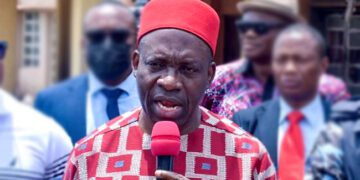
















































































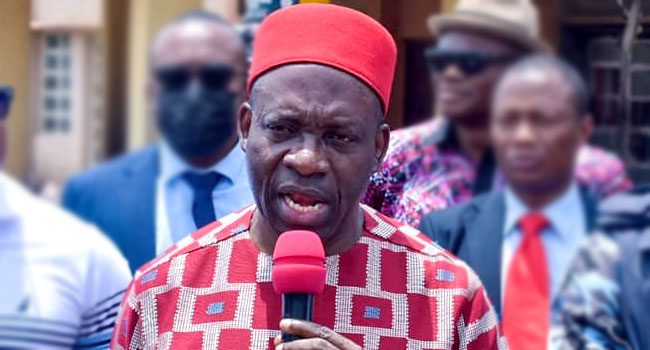
Anambra State Governor Chukwuma Soludo has said the sit-at-home orders enforced across parts of the South-East no longer serve the interests of Nnamdi Kanu, the detained leader of the Indigenous People of Biafra (IPOB), arguing that the tactic has become counterproductive and harmful to the region.
Soludo made the remarks while addressing concerns over the persistent economic and social disruptions caused by the weekly shutdowns, which have led to widespread business losses, school closures, and heightened insecurity. According to the governor, the sit-at-home actions—initially framed as a form of protest, have increasingly degenerated into coercive enforcement by criminal elements exploiting the situation.
“The sit-at-home no longer helps Nnamdi Kanu’s case,” Soludo said. “Instead, it is destroying the South-East economy, deepening poverty, and exposing innocent citizens to violence.”
The governor argued that the continued paralysis of commercial activities has weakened the region’s competitiveness and scared away investment, while doing little to advance legal or political efforts toward Kanu’s release. He added that dialogue, lawful advocacy, and engagement with the federal government remain more effective pathways.
Kanu, who is facing terrorism-related charges, has been in detention since 2021. IPOB initially declared sit-at-home protests to pressure authorities over his detention, but the orders have since evolved into a regular feature in parts of the region, often enforced through threats and attacks on those who defy them.
Soludo also noted that many South-East residents no longer support the sit-at-home actions, describing them as “self-inflicted wounds” that punish ordinary people rather than policymakers. He said state governments are working with security agencies to restore normalcy and protect citizens who wish to go about their lawful activities.
Security analysts say Soludo’s comments reflect growing frustration among political leaders and business groups in the region, who argue that the prolonged shutdowns have caused billions of naira in losses and worsened unemployment.
While reiterating his call for the federal government to handle Kanu’s case with fairness and urgency, Soludo stressed that violence and economic sabotage cannot substitute for constructive engagement.
“The South-East must move forward,” he said. “We cannot continue to hurt ourselves in the name of a cause that this approach no longer advances.”
The remarks are likely to add momentum to ongoing debates within the region over how best to address long-standing grievances without further undermining economic stability and public safety.