















































































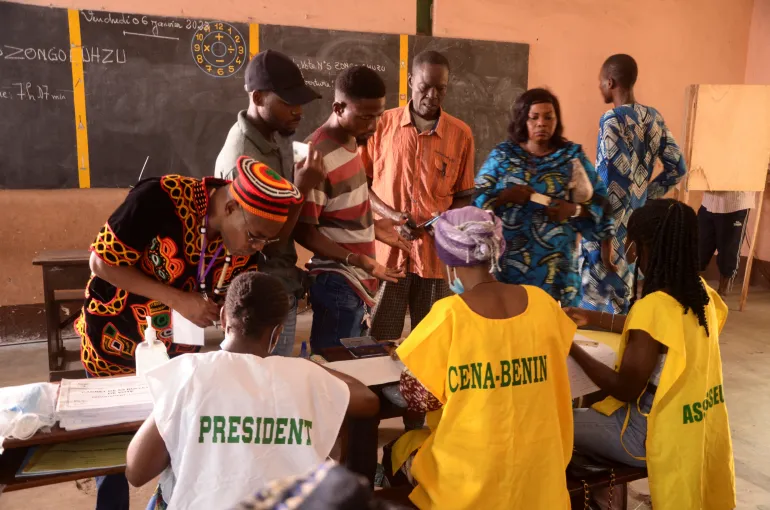
Pro-government parties in Benin have swept the parliamentary elections, leaving the opposition with no seats in the National Assembly, according to provisional results released today, Monday, 19 January 2026.
The outcome has sparked immediate controversy and claims of electoral manipulation from the opposition camp, which had hoped to make significant gains following years of political exclusion.
The Autonomous National Electoral Commission (CENA) announced that the two main parties supporting President Patrice Talon dominated the vote:
Union Progressiste pour le Renouveau (UPR): Secured the majority of the 109 seats.
Bloc Républicain (BR): Claimed the remaining seats, solidifying a total pro-Talon legislature.
The Opposition (Les Démocrates): Despite a high-energy campaign, the main opposition party failed to reach the 10% national threshold required to be allocated seats under Benin’s current electoral laws.
Analysts point to a combination of strict electoral rules and a fragmented opposition strategy:
The 10% Threshold Rule: This controversial law requires a party to garner at least 10% of the total valid votes nationwide to enter parliament. While Les Démocrates performed well in urban centers like Cotonou and Parakou, their national average fell just short of the mark.
Voter Apathy: Turnout was reported at approximately 34%, with many opposition supporters staying away from the polls in protest of what they deemed an “unfair playing field.”
Logistical Hurdles: Opposition leaders complained of late arrival of materials in their strongholds and the disqualification of several high-profile candidates in the lead-up to the vote.
Eric Houndété, leader of Les Démocrates has also addressed supporters this afternoon saying:
“These results do not reflect the will of the Beninese people. We have witnessed a systematic exclusion of the opposition through administrative technicalities. Our democracy is in a coma, and we will challenge these results in the Constitutional Court.”
Conversely, the government hailed the process as “transparent and peaceful,” stating that the results prove the public’s confidence in President Talon’s developmental agenda.
Observers from ECOWAS and the African Union noted that while the voting day was largely peaceful, the restrictive nature of the electoral code remains a concern for inclusive governance in the region.
The Constitutional Court has ten days to review any appeals before the final results are officially gazetted.