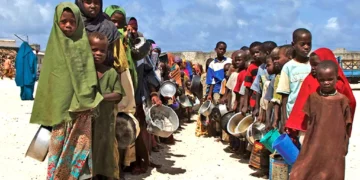














































































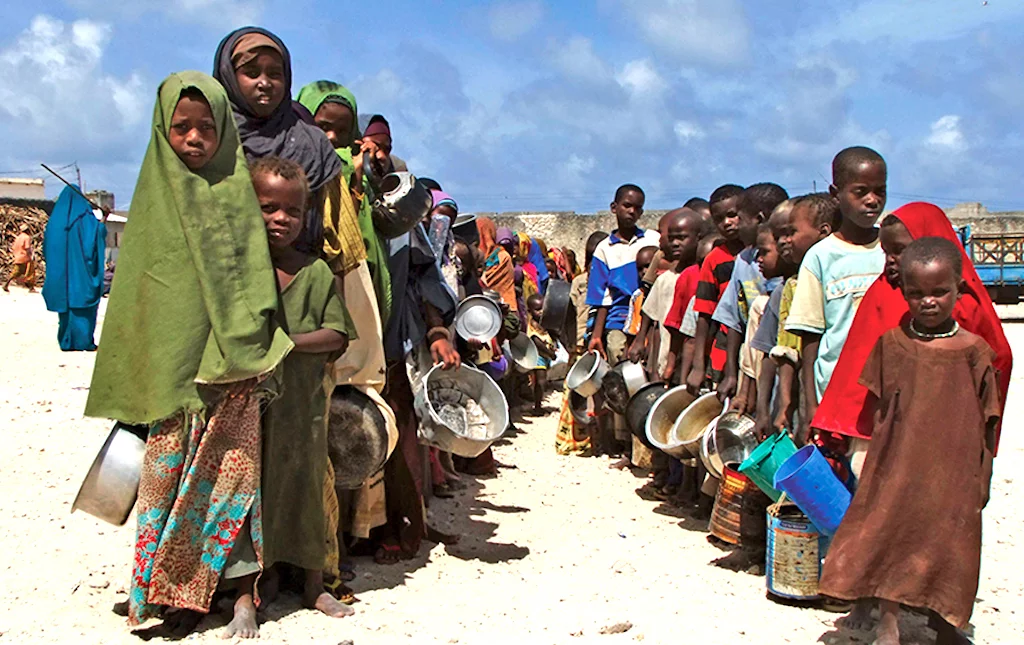
The United Nations has issued a dire warning today, Friday, 16 January 2026, stating that Northeast Nigeria is currently experiencing its most severe hunger crisis in ten years. A lethal combination of persistent insecurity, climate shocks, and a drastic reduction in international aid funding has pushed millions to the brink of famine.2
According to the latest report from the UN Office for the Coordination of Humanitarian Affairs (OCHA), the states of Borno, Adamawa, and Yobe (BAY states) are the epicentre of a “silent emergency” that is rapidly spiraling out of control.
The UN highlights that global “donor fatigue” and competing international crises (such as those in Eastern Europe and the Middle East) have led to a significant drop in the 2026 Humanitarian Response Plan for Nigeria.
With a 50% aid cut, many life-saving programs, including those run by the World Food Programme (WFP), have had their budgets slashed by half compared to 2024 levels.
Several Internally Displaced Persons (IDP) camps have seen a total suspension of food distributions, leaving families to survive on “famine foods” like wild roots and grasses.
Rates of Severe Acute Malnutrition (SAM) among children under five have risen by 40% in the last 12 months.
Hunger by the Numbers: January 2026
| Metric | Current Status | Trend |
| People in Need of Food Aid | 4.8 Million | Up |
| Facing Catastrophic Hunger | 600,000+ | Up |
| Funding Received vs Needed | 22% | Down |
| Displaced Persons (IDPs) | 2.2 Million | Stable |
Factors Driving the Crisis
Insecurity: While major battles have subsided, “lone wolf” attacks by ISWAP and Boko Haram remnants continue to prevent farmers from returning to their ancestral lands.
Climate Change: Erratic rainfall patterns in the 2025 farming season led to poor harvests, leaving grain stores empty at the start of 2026.
Inflation: Despite the “Consolidation Phase” mentioned by the Finance Ministry, the cost of basic food staples in the Northeast remains 150% higher than the 5-year average.
Matthias Schmale, UN Resident and Humanitarian Coordinator for Nigeria:
“The situation is heartbreaking. Because of these funding cuts, humanitarian workers are being forced to make impossible choices, deciding which hungry children to feed and which ones to turn away. This is the worst we have seen since the peak of the insurgency in 2016. If we do not see an immediate injection of funds, we are looking at a mass casualty event driven by starvation.”
In response to the UN report, the National Emergency Management Agency (NEMA) has announced plans to release 100,000 metric tonnes of grain from the Strategic National Reserve to the BAY states. However, experts warn that without sustained international support, domestic reserves will not be enough to bridge the gap through the “lean season” of mid-2026.