














































































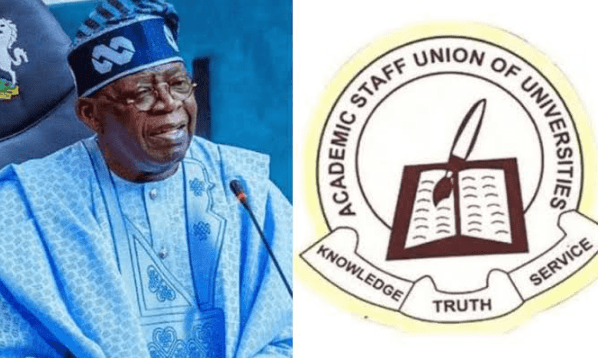
In what is being hailed as the most significant milestone for Nigeria’s tertiary education sector in decades, the Federal Government and the Academic Staff Union of Universities (ASUU) have officially signed a comprehensive agreement aimed at ending the cycle of perennial strikes and disruptions.
The deal, signed today, Wednesday, 14 January 2026, at the Ministry of Education in Abuja, comes after months of high-level negotiations involving the presidency, the National Assembly, and key stakeholders in the academic community.
The agreement, dubbed the “2026 Charter of Academic Stability,” addresses the core issues that have fueled decades of industrial action.
The FG has granted universities greater financial and administrative autonomy, including a new framework for revenue generation and retention.
ASUU’s long-standing demand has been met with the formal integration of the University Transparency and Accountability Solution (UTAS) as the official payment and personnel platform for the academic sector.
A dedicated ₦1.2 Trillion Tertiary Education Intervention Fund has been established, to be disbursed over the next five years for infrastructure and research.
A new, competitive salary structure for academic staff, benchmarked against global standards, will take effect on February 1, 2026.
As part of this historic pact, ASUU has committed to a 10-year “No-Strike” moratorium, provided the government adheres to the phased implementation of the agreement.
Speaking after the signing, the Minister of Education, Dr. Maruf Tunji Alausa noted that the deal is not just a ceasefire, but a “new blueprint” for the future of Nigerian youth.
“Today, we have buried the ghost of 2009. We have moved from promises to a legally binding framework that ensures our children will no longer spend six years for a four-year course. This is a win for the Nigerian student.” – Minister of Education, 14 Jan 2026.
Prof. Emmanuel Osodeke, ASUU President, expressed cautious optimism:
“We have reached this point because the government finally chose to listen. Our struggle has never been about our stomachs alone, but about the soul of the Nigerian university. We will monitor the implementation religiously.”
The news has sparked widespread celebration across Nigerian campuses.
Stable Academic Calendar: Students can now plan their lives with the assurance of graduating on time.
Global Competitiveness: The funding for research is expected to improve the global rankings of Nigerian universities, which have suffered due to constant closures.
Brain Drain Reversal: The new salary structure is specifically designed to attract Nigerian academics currently in the diaspora back to local institutions.