































































President Bola Tinubu has announced that Nigeria is set to unlock between $2.5 billion and $3 billion annually through a newly activated carbon market framework, marking a historic shift in the nation’s economic strategy toward “green industrialization.”
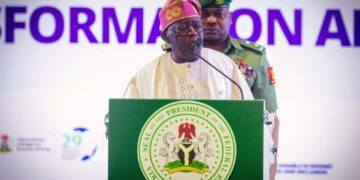
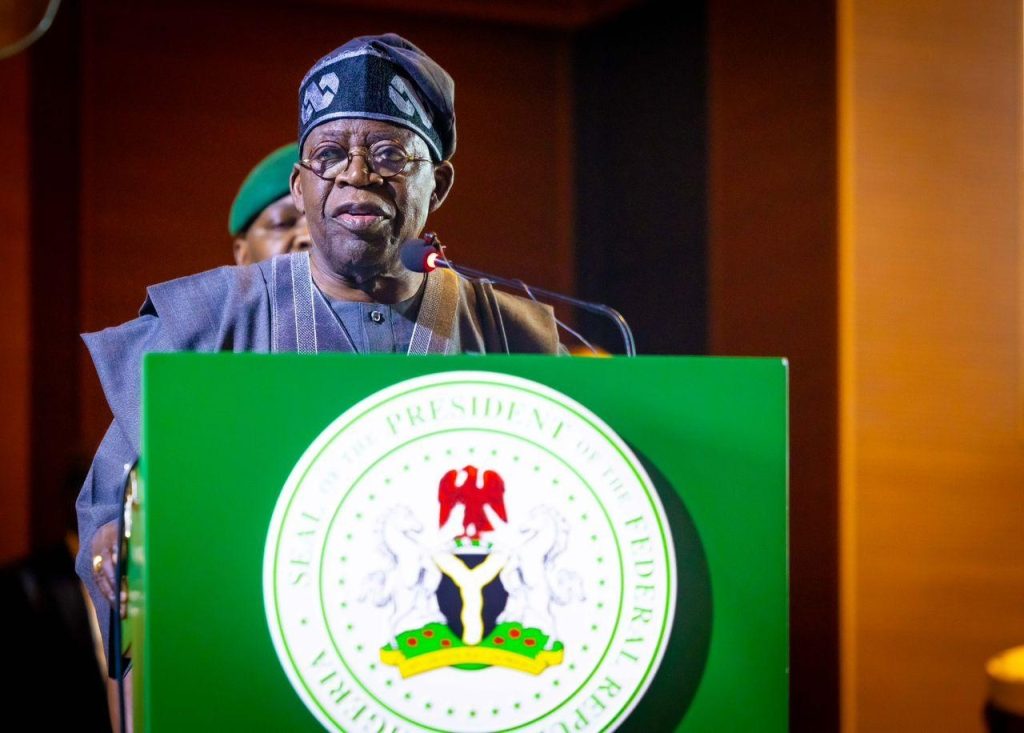
Speaking today, Tuesday, 13 January 2026, at the Abu Dhabi Sustainability Week in the United Arab Emirates, the President told global leaders and investors that Nigeria has moved beyond policy drafting into the “vigorous implementation” of its climate goals.
The $3 billion annual projection is part of a decade-long roadmap designed to monetize Nigeria’s emission-reduction efforts. By creating a structured market for carbon credits, Nigeria can “sell” its environmental progress to international polluters looking to offset their footprints.
The government has officially launched a digital registry to track, verify, and report emissions, ensuring Nigerian carbon credits meet the highest global integrity standards.
The framework aligns with Article 6 of the Paris Agreement, allowing Nigeria to engage in bilateral carbon trading with other nations and private corporations.
The revenue will be generated from projects across forestry (mangrove restoration in the Niger Delta), renewable energy (solar mini-grids), and methane capture in the oil and gas sector.
The President emphasized that the National Carbon Market Activation Plan is not just an environmental move, but a core component of the “Renewed Hope” economic agenda.
For the average Nigerian, the President promised that the “green transition” would translate into tangible benefits.
For instance, through the 2023 Electricity Act, the government is using climate finance to deploy sustainable power to rural communities, off-grid schools, and markets.
The carbon market is expected to create thousands of “green-collar” jobs in reforestation, technical auditing, and renewable energy maintenance.
By capturing gas flares and converting them into tradable credits, Nigeria aims to turn an environmental hazard into a $500 million annual revenue stream.
“Nigeria recognizes the urgent need to advance technologies that improve green efficiency. We are not just participating in the carbon market; we are leading it in Africa.13 This is an opportunity to unlock new investments and innovations that ensure no Nigerian is left behind.” – President Bola Tinubu, 13 January, 2026.
With the COP30 summit in Brazil approaching later this year, the Federal Ministry of Environment is expected to host a Carbon Investor Pitch Room in Lagos next month to showcase “ready-to-trade” projects to international buyers.