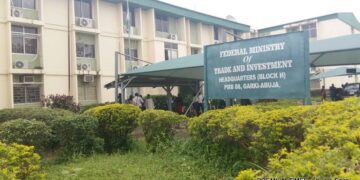






































































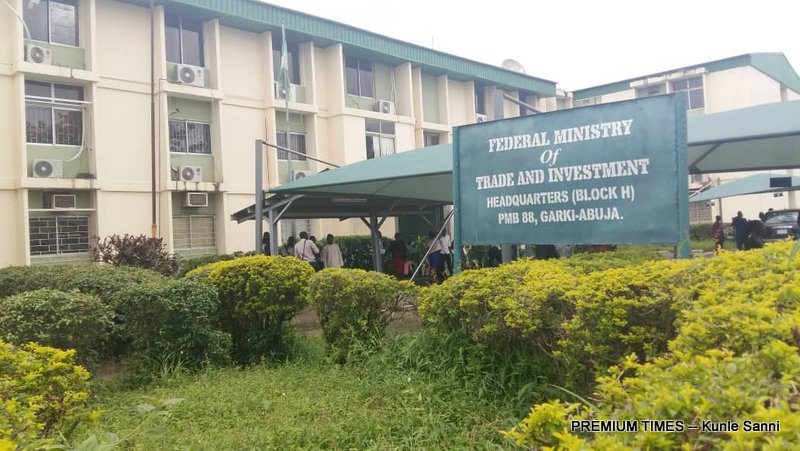
In a move reflecting the Federal Government’s shift toward fiscal rebalancing, the Ministry of Industry, Trade and Investment has seen its 2026 budget slashed by 22.92%, even as the nation records significant gains in foreign capital inflows.
The reduction, contained in the 2026 Appropriation Bill presented to the National Assembly, follows a broader executive directive to prioritize the completion of existing projects over the initiation of new ones.
By The Numbers: The Trade Ministry’s Shrinking Purse
The total allocation for the ministry has been cut to ₦87.44 billion, down from ₦110.07 billion in 2025. This represents a sustained downward trend from the ₦126.57 billion allocated in 2024.
| Category | 2025 Allocation | 2026 Proposed | Trend |
| Total Allocation | ₦110.07 billion | ₦87.44 billion | -22.92% |
| Capital Expenditure | ₦79.14 billion | ₦55.40 billion | Sharp Cut |
| Personnel Cost | ₦25.63 billion | ₦26.44 billion | Slight Rise |
| Overhead Cost | ₦5.30 billion | ₦5.60 billion | Slight Rise |
Agencies Affected: Key bodies under the ministry, such as the Oil and Gas Free Zones Authority (OGFZA), also saw their budgets trimmed, with OGFZA’s allocation falling to ₦13.29 billion (down from ₦18.98 billion in 2025).
The budget cut comes at a time when Nigeria’s investment landscape appears to be rebounding, leading to questions about the timing of the reduction in trade infrastructure funding.
Surging FDI: Combined Foreign Portfolio Investment (FPI) and Foreign Direct Investment (FDI) climbed to nearly $14 billion in the first nine months of 2025, surpassing the total inflows for the entire previous year.
Trade Surplus: Nigeria recorded a massive ₦12 trillion trade surplus in the first half of 2025, driven by a 21% growth in non-oil exports.
The Government’s Defense: Officials argue that the slash is not a sign of neglect but part of a “70% Rollover Strategy.” The Budget Ministry has directed all MDAs to roll over 70% of their unspent 2025 capital allocations into 2026, effectively “locking down” new projects to ensure value-for-money on existing ones.
The Trade Ministry’s cut is a microcosm of President Tinubu’s wider 2026 fiscal strategy, titled the “Budget of Consolidation, Renewed Resilience and Shared Prosperity.”
Total Federal Spending: Projected at ₦58.18 trillion.
Fiscal Prudence: The government is moving toward a $1 trillion economy target by curbing “revenue leakages” in solid minerals and illegal mining while tightening the belt on ministerial discretionary spending.
Sectoral Rebalancing: While Trade saw a cut, the budget heavily favors National Security, Infrastructure, and the Renewed Hope Ward Development Plan, which aims to deliver bottom-up growth across Nigeria’s 8,809 political wards.
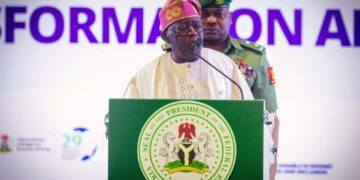
“We are entering a more robust phase of economic growth. The 2026 budget is anchored on realism and prudence; we will spend with purpose and manage debt with discipline.” – President Bola Ahmed Tinubu.