














































































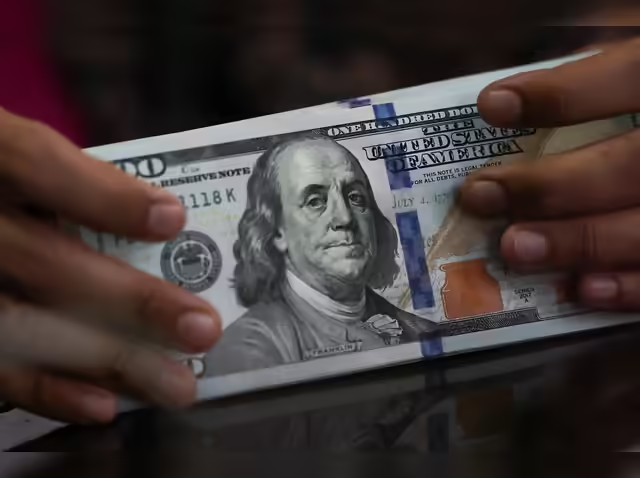
The U.S. Dollar remained largely flat against a basket of major currencies today, Wednesday, 7 January 2026 as investors adopted a “wait-and-see” approach ahead of a critical week for employment data.
With the first full trading week of the new year underway, the U.S. Dollar Index (DXY) held steady near the 101.50 level. Market participants are carefully weighing signs of a cooling labor market against the Federal Reserve’s potential interest rate path for the first quarter.
Investors are currently dissecting a series of data points that will culminate in Friday’s high-stakes Non-Farm Payrolls (NFP) report:
Earlier this week, Job Openings and Labour Turnover Survey (JOLTS) data suggested a modest decline in vacancies. Analysts view this as evidence that labor demand is “normalizing” without falling off a cliff.
Wednesday’s private employment data showed steady but slowing growth, reinforcing the narrative of an orderly economic “soft landing.”
Current market pricing suggests a 90% probability that the Federal Reserve will maintain interest rates at 3.50%–3.75% during its January 28 meeting.2 However, any significant “miss” in labor data this week could shift expectations toward a March rate cut.
While domestic data is the primary driver, international developments are providing a modest floor for the dollar.
The U.S. capture of Nicolás Maduro has caused volatility in energy markets. While crude prices dipped slightly today, the dollar is benefiting from its role as the preferred “safe haven” during geopolitical transitions.
Some Wall Street strategists, including those at Brown Brothers Harriman, point to an AI-driven productivity boom as a long-term bullish factor for the USD. High productivity allows the Fed to keep rates “restrictive for longer” without choking off growth.
After a record-breaking rally to $2,745 earlier this week, Gold saw moderate profit-taking today, easing some of the downward pressure on the dollar.
“The dollar is in a consolidation phase. We aren’t seeing a ‘breakout’ yet because the market needs to see if the U.S. consumer is still hiring or if the holiday season was the last hurrah for the job market.” – Frank Davies, Currency News Analyst.