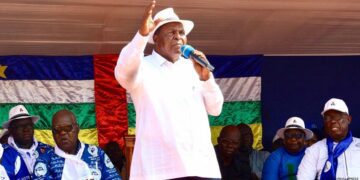















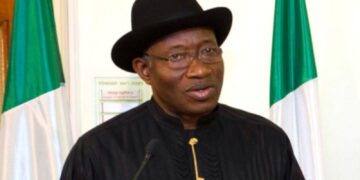























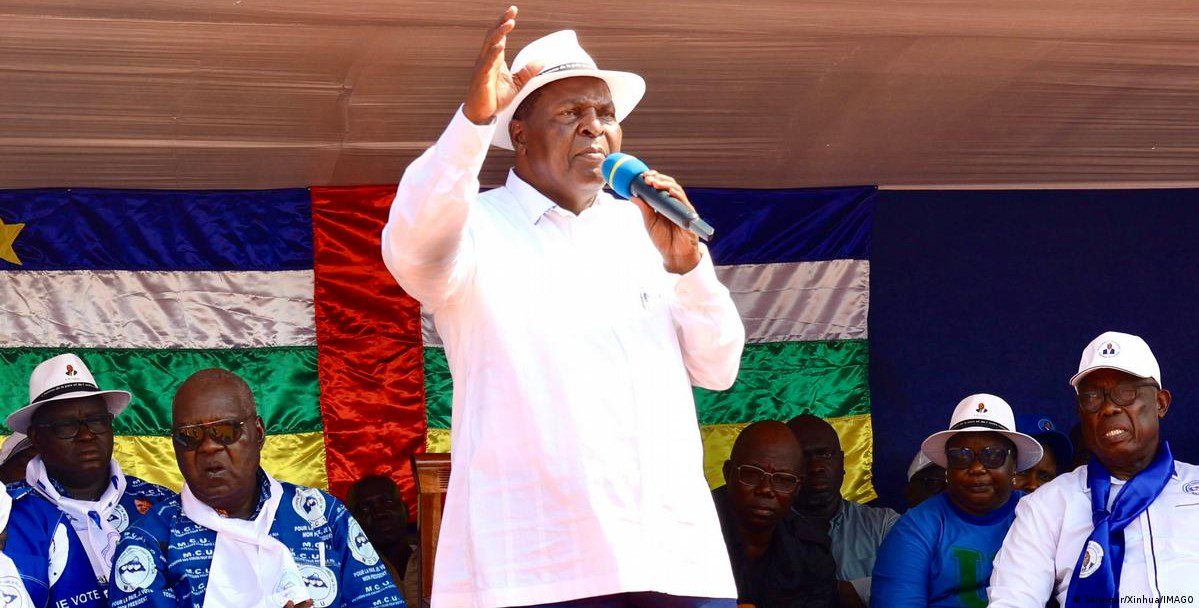
Incumbent President Faustin-Archange Touadera has been provisionally re-elected for a third term in the Central African Republic (CAR), according to results released by the National Elections Authority (ANE) late on Monday night, 5 January 2026.
Touadera, a 68-year-old mathematician who has governed the chronically unstable nation for a decade, secured an absolute majority in the first round of the December 28 polls.2 The victory follows a controversial 2023 constitutional referendum that scrapped presidential term limits, a move the opposition has labeled a “power grab.”
The provisional figures show a massive gap between the incumbent and his closest rivals:
| Candidate | Party | Vote Share |
| Faustin-Archange Touadera | United Hearts Movement (MCU) | 76.15% |
| Anicet-Georges Dologuele | Union for Central African Renewal | 14.66% |
| Henri-Marie Dondra | Independent (Former PM) | 3.19% |
Reportedly, approximately 52.42% of the 2.4 million registered voters participated, and for the first time, CAR citizens voted simultaneously for presidential, legislative, regional, and municipal seats.
The landslide victory is already being overshadowed by claims of widespread malpractice and a strategic boycott by the main opposition coalition, the BRDC.
Runner-up Anicet-Georges Dologuele held a press conference shortly after the results, alleging “methodical attempts to manipulate” the outcome. He had already proclaimed himself the winner on Friday, 02 January.
The BRDC coalition boycotted the vote entirely, arguing that the political environment was unequal and that the removal of term limits made a fair contest impossible.
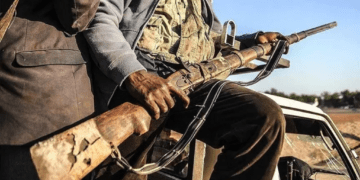
Touadera campaigned on his record of relative stability, bolstered by Russian military instructors and Rwandan soldiers, though analysts warn the security gains remain fragile as several rebel groups have recently pulled out of peace accords.
Touadera’s victory cements CAR’s status as a key Russian ally in Africa, but the President has signaled a shifting diplomatic strategy for his third term.
Critics often use the moniker, ‘President Wagner’ to describe Touadera’s policy in this regard due to reliance on Russian paramilitaries. Also as his win ensures Moscow maintains access to the country’s lucrative gold and diamond reserves.
However, in a post-election statement, Touadera hinted at a renewed interest in Western partnerships, inviting “any country” to help develop CAR’s lithium and uranium deposits.
The win comes as the UN peacekeeping mission (MINUSCA) faces significant financial constraints and a planned drawdown, leaving Touadera increasingly dependent on bilateral security deals.
Notably, the results are currently provisional, and candidates have a window to file legal challenges with the Constitutional Court.
The Court has until 20 January 2026, to adjudicate these challenges and declare the final, official results.