













































In a historic moment for international law and global politics, deposed Venezuelan President Nicolás Maduro made his first appearance in a U.S. federal courtroom today, Monday, 5 January 2026.
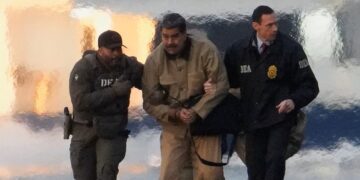
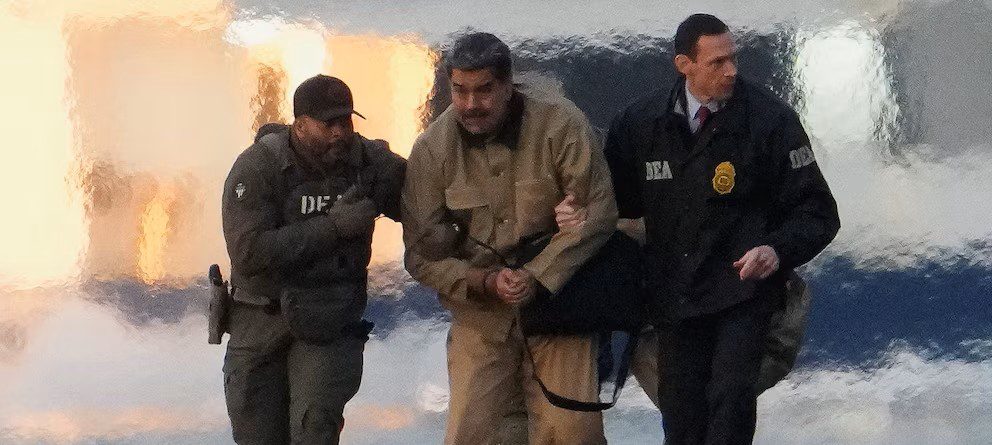
Following a high-security transfer from the Metropolitan Detention Centre in Brooklyn, involving a SWAT-escorted helicopter flight across New York Harbour, Maduro and his wife, Cilia Flores, were brought before U.S. District Judge Alvin Hellerstein at the Daniel Patrick Moynihan Courthouse in Lower Manhattan.
The arraignment was brief but thick with tension, as the man who ruled Venezuela for over a decade stood shackled before an American judge.
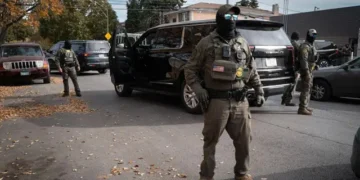
Maduro, 63, wearing a brown jacket and appearing “visibly shaken” and limping, was escorted by heavily armed DEA agents.
The court formally unsealed a 25-page indictment accusing Maduro and his “inner circle” of leading the Cartel of the Suns, a narco-terrorism organization that allegedly conspired with the FARC and Mexican cartels to flood the U.S. with over 250 tons of cocaine annually.
Maduro’s court-appointed counsel immediately challenged the legality of his capture, arguing that as a sovereign head of state, he possesses absolute immunity. However, the U.S. Department of Justice (DOJ) argues that because Washington has not recognized Maduro as the legitimate leader since 2019, such immunity does not apply.
Key Charges Faced by Maduro & Flores
The “narco-terrorism” indictment carries a mandatory minimum sentence of 20 years to life in prison.
| Count | Charge | Allegation Summary |
| Count 1 | Narco-Terrorism Conspiracy | Leading a state-sponsored drug cartel to undermine the U.S. |
| Count 2 | Cocaine Importation Conspiracy | Partnering with the Sinaloa Cartel and the FARC to ship cocaine. |
| Count 3 | Weapons Charges | Possession and use of machine guns and destructive devices. |
| Count 4 | Bribes & Murders | Ordering the “beatings and murders” of those who owed drug debts. |
As the trial begins in New York, the landscape in Caracas is shifting rapidly, in a stunning reversal late Sunday, interim leader Delcy Rodríguez dropped her defiant tone, offering to “work together” with the Trump administration on a cooperation agenda to stabilize the country.
The Venezuelan military has signaled it will recognize Rodríguez’s interim authority and has urged for calm, though Defense Minister Padrino López claimed much of Maduro’s security detail was killed “in cold blood” during the U.S. raid.
The Cuban government has condemned the raid, reporting that 32 Cuban nationals were killed during the U.S. assault on Maduro’s fortified safe house.
President Trump, who watched the capture via a live feed from Mar-a-Lago, reiterated today that the U.S. is “in charge” of ensuring Venezuela’s oil infrastructure is modernized. Oil prices settled lower today as traders bet that U.S. intervention will eventually lead to a more stable, higher-output Venezuelan energy sector.