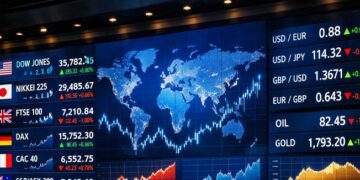
















































































Global financial markets have greeted the dramatic U.S. capture of Nicolás Maduro with surprising calm. As trading opened for the first full week of January 2026, investors largely “looked through” the geopolitical shock in Caracas, opting to focus on broader economic data and a well-supplied energy market.
Despite President Trump’s assertion that the U.S. will “run” Venezuela, major asset classes remained range-bound on Monday, 5 January, as analysts downplayed the likelihood of immediate economic contagion.
| Asset Class | Movement | Close/Level | Sentiment |
| S&P 500 Futures | +0.3% | 6,879.00 | Optimistic: US energy and defence stocks lead. |
| Brent Crude | +0.5% | $61.06/bbl | Steady: OPEC+ stability offsets Caracas risk. |
| Gold (XAU/USD) | +2.0% | $2,745.00 | Safe Haven: Moderate flight to safety. |
| Vzla 2027 Bond | +27.0% | 40¢ on dollar | Bullish: Investors bet on debt restructuring. |
While Venezuela holds roughly 17% of global crude reserves, it currently accounts for only 1% of global production (approx. 900,000 bpd). Analysts from Capital Economics noted that even a total shutdown of Venezuelan exports would be easily absorbed by the current global supply glut, particularly with U.S. shale production at record highs.
The market was further stabilized by OPEC+, which met on Sunday, 4 January. The alliance, led by Saudi Arabia and Russia, voted to maintain current production cuts through April 2026. This move provided a floor for oil prices, neutralizing fears that Trump’s intervention would lead to an immediate “supply flood.”
Investors are closely watching the “high-stakes diplomatic costs” mentioned by the White House.
Furthermore, while the strike was bold, the market currently views it as a localized Latin American event rather than the start of a global conflict.
Gains in defense stocks (+3.7% in Europe) and precious metals (+2% for Gold) suggest that while investors aren’t panicking, they are paying for “geopolitical insurance” in case Beijing or Moscow escalates.
The most explosive reaction occurred in the Venezuelan bond market. Debt that has been “dead” since the 2017 default saw a massive rally.7 The 2027 government bond jumped from 31¢ to over 40¢ on the dollar, as speculators bet that a U.S.-backed administration will eventually prioritize repaying Western creditors to regain access to capital markets.
For the U.S. domestic market, the move is seen as a long-term win for the “Energy Dominance” agenda.
Chevron (CVX) and ExxonMobil (XOM) shares rose in pre-market trading (+7% and +3.7% respectively) as investors anticipated these giants would be granted “first-mover” rights to rehabilitate Venezuela’s dilapidated refineries.
If the U.S. successfully “runs” the transition, it could secure a decades-long supply of heavy crude for Gulf Coast refineries, potentially decoupling U.S. gasoline prices from Middle Eastern volatility by 2028.
“The removal of Maduro is a geopolitical earthquake, but for the global economy, it’s currently a tremor. The infrastructure in Venezuela is so broken that any ‘new oil’ is years away.” – Neil Shearing, Capital Economics.