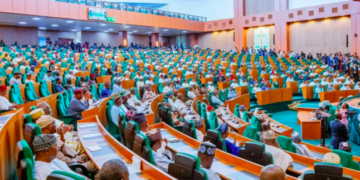






































































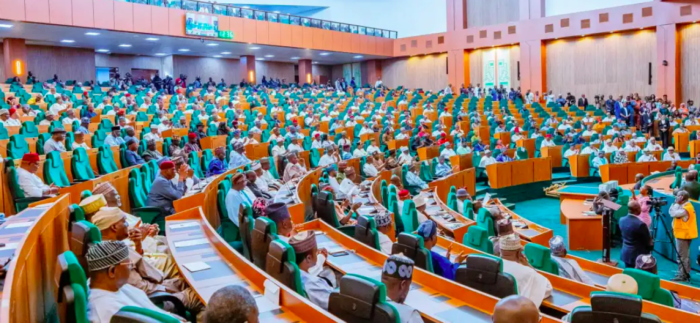
The House of Representatives has provided a formal explanation for its recent decision to repeal and re-enact the 2024 and 2025 Appropriation Acts. The move, which follows a request from President Bola Tinubu, is described as a “strategic reset” intended to fix structural flaws in Nigeria’s fiscal cycle.
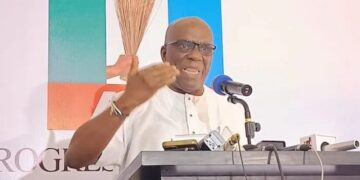
Speaking today, Friday, 26 December 2025, the Deputy Spokesperson of the House, Hon. Philip Agbese, clarified that the legislative action was necessary to end the “chaotic” practice of running multiple national budgets simultaneously.
The House outlined three primary reasons for taking this rare legislative step instead of simply passing a supplementary budget.
Noting that Nigeria has been operating several budgets at once (e.g., implementing the 2024 capital budget while the 2025 budget is already active), lawmakers admitted this practice leads to “fiscal confusion” and dilutes the impact of government spending.
Agbese also posited that the re-enactment aligns Nigeria with international budgeting standards, aiming for a single, predictable budget cycle that will officially take hold after March 31, 2026.
The 2025 budget was significantly downsized from its original ₦54.99 trillion to a more “realistic” ₦48.31 trillion to reflect current revenue constraints and the government’s actual execution capacity.
The National Assembly approved the some reworked frameworks this week including; a critical component of the re-enactment, the extension of the 2025 fiscal year, authorizing the capital component of the 2025 budget to run until March 31, 2026.
To allow Ministries, Departments, and Agencies (MDAs) enough time to achieve at least a 30% capital implementation rate, which was deemed impossible under the original December 31 deadline; and to prevent further overlaps, the House Committee on Appropriations, led by Hon. Abubakar Bichi, emphasized that funds must be applied strictly to the purposes specified in the new schedules, with “virement” (shifting funds between projects) now requiring stricter legislative approval.
The new Acts empower the National Assembly to issue ‘corrigenda’, a mechanism to correct errors in project costing or location without altering the total budget sum. Additionally, the Accountant-General of the Federation is now legally mandated to disburse funds only upon specific warrants, ensuring tighter control over the Consolidated Revenue Fund.