


































































By TheLink News Climate & Humanitarian Affairs Desk
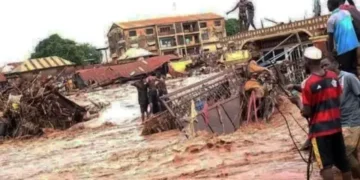
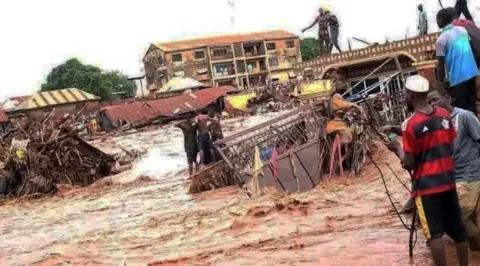
Nigeria is facing one of its most catastrophic natural disasters in decades, as severe flooding, described by officials as the worst in over 60 years, has claimed the lives of at least 150 people, displaced tens of thousands, and ravaged homes and farmland across large swaths of the country.
Triggered by weeks of relentless torrential rainfall, the flooding has hit northern and central Nigeria hardest, with rivers, including the Niger and Benue, bursting their banks and submerging entire communities.
In states like Kebbi, Niger, Benue, and parts of Taraba, residents have been forced to flee with little more than the clothes on their backs. Emergency shelters are overcrowded, food supplies are stretched thin, and local officials warn that more rainfall is expected in the coming days.
“The water came in the night. We didn’t have time to take anything,” said Amina Lawal, a mother of three from a submerged village in Kebbi. “Our house is gone. Everything is gone.”
Over 15,000 homes have been either partially or completely destroyed, and farmlands crucial to the country’s food supply are underwater, raising fears of another food crisis in the coming months.
The National Emergency Management Agency (NEMA) has activated a Level 3 emergency response, deploying rescue teams, distributing relief materials, and coordinating with state governments. However, access to remote communities remains a major challenge due to washed-out roads and collapsed bridges.
“We are overwhelmed,” admitted a NEMA official speaking from a temporary camp in Niger State. “The scale of this disaster is bigger than what we’re currently equipped to handle.”
The Nigerian Red Cross and Médecins Sans Frontières (MSF) have joined the response, setting up mobile clinics and water purification points to prevent disease outbreaks, particularly cholera and malaria.
Climate scientists say the severity of this year’s floods is consistent with long-term predictions about rising extreme weather events in West Africa. However, they also point to local factors, such as poor drainage infrastructure, illegal building on floodplains, and lack of early warning systems, as reasons why the impact has been so devastating.
“Nigeria is paying the price for years of inaction on climate adaptation,” said Dr. Bolaji Ogunleye, a hydrologist at the University of Lagos. “This won’t be a one-off event, it’s the new normal unless we rethink how we build, farm, and govern.”
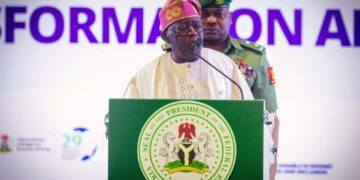
President Bola Tinubu has described the floods as a “national emergency” and pledged federal assistance, but critics argue the government’s response so far has been too slow and reactive. Several governors have declared states of emergency and appealed for international aid.
Civil society groups are calling for the establishment of a permanent National Flood Response Fund, better urban planning laws, and community-based flood early warning systems.
As floodwaters continue to rise in some areas, Nigeria is being forced to confront the consequences of climate inaction, infrastructural decay, and poor preparedness. For many of those affected, recovery will take months, if not years. And for the nation, the flood is not just a humanitarian crisis, it’s a warning of what lies ahead in a warming world.