



































































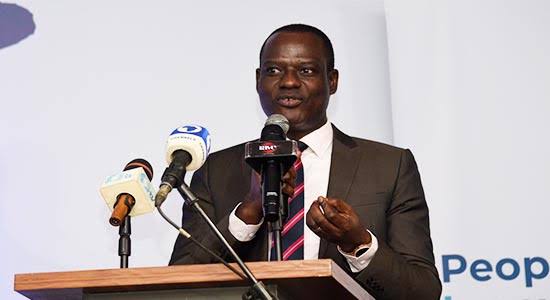
In a startling revelation that highlights the deep structural inequities in Nigeria’s fiscal system, Taiwo Oyedele, Chairman of the Presidential Committee on Fiscal Policy and Tax Reforms, has disclosed that 96% of the country’s Personal Income Tax (PIT) is currently generated from low-income earners.
Speaking at a policy dialogue today, Thursday, 15 January 2026, Oyedele described the current tax architecture as “regressive and unsustainable,” noting that the wealthiest Nigerians contribute the least to the national pool of personal taxes.
Oyedele’s findings suggest that the tax burden in Nigeria is disproportionately carried by those with the least financial capacity, largely due to the efficiency of the PAYE (Pay As You Earn) system for formal workers versus the widespread tax evasion among the high-net-worth individuals.
The vast majority of PIT comes from junior and mid-level civil servants and formal sector employees whose taxes are deducted at the source.
Oyedele noted that many wealthy Nigerians and informal sector moguls operate outside the tax net or pay “tokenistic” amounts that do not reflect their true income.
This imbalance is a primary reason why Nigeria’s tax-to-GDP ratio remains among the lowest in the world, despite the country’s massive private wealth.
The Presidential Committee, under Oyedele’s leadership, has proposed a series of aggressive reforms to flip this pyramid by the end of 2026.
During his presentation, Oyedele emphasized that the government’s goal is not necessarily to increase taxes, but to increase the tax base.
“What we have in Nigeria is a system where we are over-taxing poverty and under-taxing wealth. When 96% of your personal income tax comes from people who can barely afford three meals a day, while the elite pay next to nothing, you are stifling economic growth. We must shift the burden to those who have the capacity to pay.” – Taiwo Oyedele, Jan 15, 2026.
Economists warn that this heavy reliance on low-income earners reduces the disposable income of the masses, which in turn slows down consumer spending, the engine of the Nigerian economy.
By exempting those at the bottom and effectively capturing those at the top, the Presidential Committee hopes to stimulate the economy while simultaneously doubling the government’s tax revenue by 2027.